
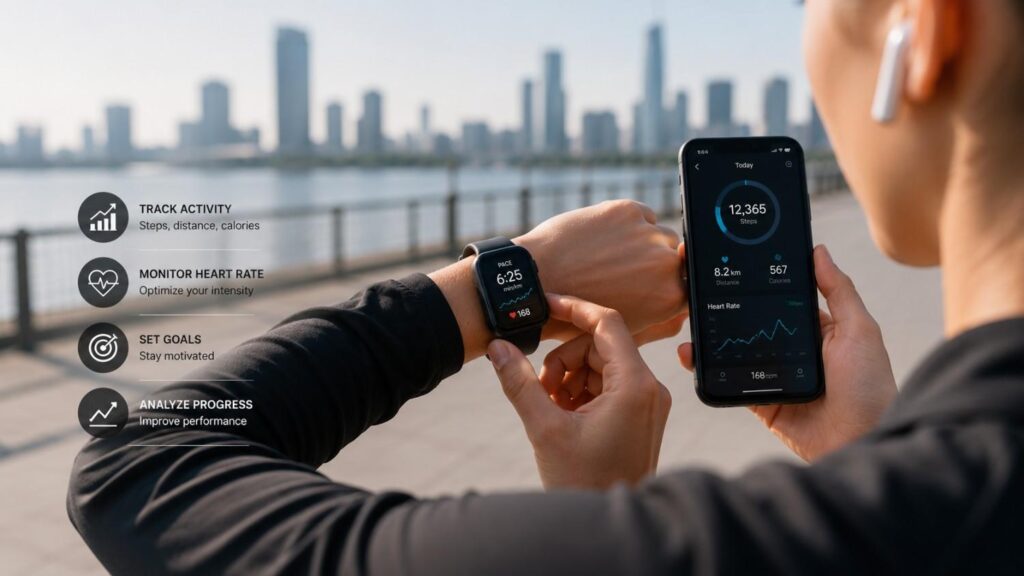
How to Use Fitness Trackers to Improve Your Performance
Fitness trackers have completely changed the way people approach exercise, health, and personal performance. What once started as simple step-counting devices has evolved into advanced wearable technology capable of monitoring dozens of health and fitness metrics throughout the day. Whether you are walking to improve your health, training for a marathon, lifting weights in the gym, or simply trying to become more active, modern fitness trackers provide continuous insights that help you understand how your body performs both during exercise and while recovering afterward.
One of the biggest advantages of fitness trackers is their ability to replace assumptions with measurable information. Many people believe they are exercising hard enough or getting sufficient sleep, but the data often tells a different story. By tracking heart rate, active minutes, calories burned, sleep quality, stress levels, and recovery, users gain a much clearer understanding of their daily habits. These insights make it easier to identify strengths, recognize weaknesses, and adjust routines based on actual performance instead of guesswork.
In my experience, many people purchase a fitness tracker with great enthusiasm but only use a small percentage of its available features. Most users regularly check their step count while ignoring valuable information such as resting heart rate, training readiness, VO2 Max estimates, recovery scores, or workout intensity zones. Learning how these features work can dramatically improve the effectiveness of your workouts and help prevent common problems such as overtraining, inconsistent exercise, or poor recovery.
This guide explains how to use fitness trackers to improve your performance by understanding the most valuable health metrics, setting realistic fitness goals, monitoring workout intensity, optimizing recovery, and making data-driven decisions that support long-term progress. Rather than chasing daily numbers, you will learn how to use wearable technology as a practical tool for building healthier habits, improving athletic performance, and maintaining consistent fitness results over time.
Understanding How Fitness Trackers Work
Fitness trackers are designed to collect and analyze information about your daily movement, exercise habits, and overall health using a combination of advanced sensors and intelligent software. Rather than simply counting steps, modern wearables continuously monitor multiple aspects of your physical activity to provide a detailed picture of how your body performs throughout the day. These devices gather information while you walk, run, cycle, sleep, or even sit at your desk, allowing you to identify patterns that would otherwise be difficult to notice.
The real value of a fitness tracker lies in its ability to transform raw numbers into meaningful insights. While daily statistics such as calories burned or total steps are useful, the long-term trends are often much more important. By reviewing weeks or months of data, users can determine whether their cardiovascular fitness is improving, if their sleep quality is increasing, or whether they are consistently reaching their activity goals. This broader perspective helps create healthier habits that support sustainable progress rather than short-term motivation.
Modern fitness trackers combine information from accelerometers, optical heart rate sensors, GPS, gyroscopes, temperature sensors, and advanced algorithms to estimate activity levels and physiological responses. Although no consumer wearable provides perfect medical-grade accuracy, most devices offer highly useful trend data that can guide smarter training decisions. Understanding what your tracker measures—and how those measurements relate to your fitness goals—helps you use the technology far more effectively.
Instead of trying to monitor every available statistic, focus on the metrics that directly support your objectives. Whether your goal is weight management, endurance training, muscle building, or improving overall health, selecting a few meaningful indicators will help you stay focused and avoid becoming overwhelmed by unnecessary information.
What Data Do Fitness Trackers Measure?
Modern fitness trackers collect a wide range of information that helps users understand both their daily activity and overall health. Basic devices typically monitor daily steps, distance traveled, calories burned, active minutes, and workout duration. These metrics provide a simple overview of movement throughout the day and encourage users to remain physically active by tracking progress toward personalized goals. Even these basic measurements can become powerful motivational tools when reviewed consistently over time.
More advanced fitness trackers include additional sensors that measure heart rate continuously throughout the day, monitor sleep duration and sleep stages, estimate stress levels, track workout intensity, and record GPS routes for outdoor activities such as running, cycling, and hiking. These features allow users to evaluate not only how much they exercise but also how effectively their bodies recover after physical activity. This combination of exercise and recovery data creates a more complete understanding of overall fitness.
Premium wearable devices often include even more sophisticated health metrics. Depending on the model, they may estimate blood oxygen saturation (SpO₂), VO2 Max, training readiness, recovery scores, heart rate variability (HRV), skin temperature, ECG functionality, and advanced performance analytics. While these estimates should not replace professional medical evaluations, they provide useful indicators that help users recognize long-term changes in fitness and wellness.
Rather than checking every statistic each day, it is usually more effective to identify two or three measurements that align with your personal goals. For example, runners may prioritize pace, heart rate, and distance, while someone focusing on weight loss may pay greater attention to calories burned, daily activity, and active minutes. Choosing the right metrics makes your fitness tracker much easier to use and significantly more valuable.
| Fitness Metric | What It Tracks | Why It Matters | Best For |
|---|---|---|---|
| Daily Steps | Total movement throughout the day | Encourages an active lifestyle | Beginners & Weight Loss |
| Heart Rate | Exercise intensity and cardiovascular health | Helps optimize workout intensity | Cardio & Endurance Training |
| Calories Burned | Estimated energy expenditure | Supports calorie management | Weight Loss Goals |
| Sleep Tracking | Sleep duration and quality | Improves recovery and performance | All Fitness Levels |
| Active Minutes | Time spent exercising | Measures workout consistency | General Fitness |
| GPS Tracking | Distance, pace, and routes | Provides accurate outdoor workout data | Runners & Cyclists |
| Recovery Metrics | Recovery readiness and fatigue | Helps prevent overtraining | Athletes |
| VO2 Max Estimate | Aerobic fitness level | Measures endurance improvement | Advanced Users |
Why Accurate Tracking Matters
Accurate tracking plays an important role in improving fitness because it replaces assumptions with objective information. Without measurable data, many people rely on how they feel after a workout to judge whether they exercised effectively. However, feelings can be misleading. A workout that feels difficult is not always the most productive, while a session that feels easier may actually produce better long-term results. Fitness trackers provide measurable evidence that helps users evaluate their performance more objectively.
Reliable tracking also helps identify gradual improvements that are difficult to notice from day to day. Small reductions in resting heart rate, longer periods of quality sleep, increased daily activity, or improved endurance may seem insignificant individually, but together they demonstrate meaningful progress over weeks and months. Seeing these positive trends can improve motivation and encourage users to remain consistent even when visible physical changes occur more slowly.
Another important benefit of accurate tracking is injury prevention and recovery management. Monitoring resting heart rate, sleep quality, workout frequency, and exercise intensity helps users recognize signs of excessive fatigue before overtraining develops. If recovery metrics consistently decline or resting heart rate remains elevated, it may indicate the need for additional rest, improved nutrition, or reduced training intensity. Paying attention to these warning signs supports healthier long-term progress.
Although fitness trackers are not perfect medical instruments, their greatest strength lies in identifying consistent trends rather than producing perfectly accurate individual measurements. When used regularly under similar conditions, they become highly effective tools for evaluating progress, adjusting training programs, maintaining accountability, and building healthier habits that contribute to improved fitness performance over time.
Related Articles
Choosing the Right Metrics
Choosing the right metrics is one of the most important steps in using a fitness tracker effectively. Many wearables provide dozens of different statistics, but trying to monitor everything at once often creates confusion rather than useful insight. Instead of focusing on every available number, identify the measurements that directly support your personal fitness objectives. This approach keeps your attention on meaningful progress instead of becoming distracted by unnecessary data.
Different goals require different performance indicators. Someone trying to lose weight may benefit most from tracking calories burned, daily steps, active minutes, and exercise frequency. A runner, on the other hand, will likely focus on pace, distance, cadence, heart rate zones, and recovery. Individuals interested in strength training may prioritize workout duration, recovery scores, resting heart rate, and sleep quality rather than total step count. Selecting appropriate metrics allows you to evaluate progress in ways that truly reflect your goals.
It is also important to remember that no single measurement tells the complete story. For example, daily step count alone cannot accurately represent overall fitness. Combining activity metrics with recovery indicators such as sleep quality and resting heart rate provides a much more balanced understanding of how your body responds to training. Looking at multiple related measurements creates more reliable insights than depending on one statistic alone.
As your fitness level improves, your priorities may also change. Beginners often focus on consistency and daily activity, while more experienced athletes may monitor advanced performance indicators such as VO2 Max, heart rate variability, or training readiness. Reviewing your selected metrics regularly and adjusting them as your goals evolve ensures that your fitness tracker continues to provide relevant information that supports long-term improvement rather than simply collecting data.
Set Goals Before Tracking Progress
A fitness tracker becomes significantly more valuable when it is used with a clear purpose. Simply collecting data every day without having specific objectives often leads to information overload rather than meaningful improvement. Before paying attention to step counts, calories burned, or heart rate trends, it is important to define what success actually looks like for you. Your goals should reflect your current fitness level, lifestyle, and long-term ambitions instead of copying targets from other people or relying on generic defaults.
Setting goals provides direction for your training and gives context to the data your fitness tracker collects. For example, someone preparing for a marathon will focus on endurance, pace, and recovery, while another person aiming to lose weight may prioritize daily activity, calorie expenditure, and consistency. When your goals are clearly defined, every metric collected by your wearable becomes more useful because it helps measure progress toward a specific outcome.
One of the biggest mistakes people make is expecting immediate results. Fitness improvements usually happen gradually, and daily fluctuations are completely normal. Rather than becoming discouraged by a single low-activity day or an unusually high resting heart rate, focus on building consistent habits over weeks and months. Long-term progress is far more meaningful than isolated daily achievements, and your fitness tracker is designed to reveal these broader trends.
A structured goal-setting approach also increases motivation and accountability. Watching your progress improve over time reinforces positive habits and encourages you to remain committed to your routine. By combining realistic expectations with regular performance reviews, your fitness tracker becomes more than a wearable device—it becomes a personal coach that helps guide smarter decisions and supports sustainable fitness success.
Create SMART Fitness Goals
Creating SMART goals is one of the most effective ways to use your fitness tracker productively. SMART stands for Specific, Measurable, Achievable, Relevant, and Time-bound. Instead of setting vague objectives such as “I want to get fit,” define clear goals that can be tracked using the data your wearable provides. This approach transforms general motivation into practical actions that are easier to measure and achieve.
For example, instead of saying you want to become more active, set a target such as walking 10,000 steps at least five days per week or completing 150 minutes of moderate exercise every week. Runners might aim to increase their weekly distance by ten percent each month, while strength trainers could focus on maintaining consistent workout frequency and improving recovery scores. Because these goals are measurable, your fitness tracker can provide immediate feedback on whether you are making progress.
Realistic expectations are equally important. Setting goals that are too ambitious often leads to frustration and loss of motivation, while goals that are too easy provide little challenge or improvement. Begin with targets that match your current fitness level and gradually increase the difficulty as your endurance, strength, or activity levels improve. Small, consistent achievements create lasting habits that produce better long-term results than dramatic short-term efforts.
Review your SMART goals regularly and adjust them as your fitness improves. As you become stronger or more active, your objectives should evolve to provide new challenges. Updating your goals keeps your workouts engaging, prevents plateaus, and ensures that your fitness tracker continues supporting meaningful progress rather than simply repeating the same daily targets.
Customize Daily Targets
Most modern fitness trackers allow users to personalize daily activity goals instead of relying on default recommendations. This flexibility is important because every individual has different abilities, schedules, health conditions, and fitness objectives. A goal that motivates one person may be unrealistic or unnecessary for someone else. Customizing your targets creates a plan that is both challenging and achievable, making it easier to remain consistent over time.
Common customizable goals include daily steps, calories burned, active minutes, exercise sessions, standing reminders, sleep duration, water intake, and movement notifications. Rather than attempting to maximize every category, prioritize the goals that support your primary objective. For example, someone focusing on cardiovascular health may increase active minutes, while a person recovering from injury may simply aim to maintain regular walking habits and quality sleep.
Lifestyle should also influence your daily targets. Office workers who spend long hours sitting may benefit from frequent movement reminders, while athletes may focus more on recovery, heart rate, and training intensity. Personalizing these settings ensures your fitness tracker works with your routine instead of creating unrealistic expectations that become difficult to maintain during busy weeks.
As your fitness improves, periodically review and adjust your targets to reflect your new capabilities. Increasing step goals, workout frequency, or activity duration gradually keeps you progressing without overwhelming your body. Small adjustments over time help prevent plateaus while allowing your wearable to remain an effective tool for measuring continuous improvement and maintaining long-term motivation.
Review Your Progress Weekly
Reviewing your progress every week is one of the most effective ways to use a fitness tracker successfully. Many people become overly focused on daily numbers, checking step counts or calorie totals several times a day. While daily monitoring can be motivating, individual days are influenced by work schedules, weather, travel, stress, and recovery. Weekly reviews provide a much more accurate picture of your overall consistency and progress.
During your weekly review, look beyond individual workouts and evaluate broader patterns. Ask yourself whether you completed your planned exercise sessions, maintained your activity goals, achieved sufficient sleep, and recovered properly between workouts. Comparing trends rather than isolated results helps identify improvements that may not be obvious from day-to-day fluctuations. For example, a gradually decreasing resting heart rate or improved sleep consistency often indicates meaningful fitness progress.
Weekly analysis also helps identify areas requiring adjustment. If active minutes consistently fall below your target or recovery scores decline after several intense workouts, you can modify your schedule before these issues begin affecting performance. Likewise, if your goals have become consistently easy to achieve, it may be time to increase training intensity or establish new objectives that better reflect your improving fitness level.
Keeping a simple journal alongside your fitness tracker data can provide even deeper insights. Recording how you felt during workouts, energy levels, nutrition, hydration, and stress allows you to connect lifestyle habits with wearable data. Over time, these weekly reviews create a valuable record of your progress and help you make smarter, data-driven decisions that support continuous improvement and long-term fitness success.
Use Heart Rate Data to Train Smarter
Heart rate is one of the most valuable metrics available on modern fitness trackers because it provides real-time insight into how hard your cardiovascular system is working during exercise. Unlike step counts or calorie estimates, heart rate responds directly to your body’s effort, making it a more reliable indicator of workout intensity. By learning how to interpret heart rate data, you can improve endurance, optimize fat burning, enhance recovery, and reduce the risk of overtraining.
Many people exercise at the same intensity every day without realizing whether they are training too hard or not challenging themselves enough. A fitness tracker helps remove this uncertainty by continuously monitoring your heart rate throughout each workout. This information allows you to adjust your pace during exercise rather than relying only on how tired you feel. Over time, training within the appropriate heart rate ranges leads to better cardiovascular fitness and more efficient performance improvements.
Heart rate monitoring is also useful outside of workouts. Resting heart rate, recovery heart rate, and long-term heart rate trends provide valuable information about overall health, stress levels, and physical readiness. Changes in these measurements can indicate whether your body is adapting well to training or needs additional recovery. Paying attention to these signals helps you make informed decisions about when to push harder and when to prioritize rest.
Rather than chasing maximum effort during every workout, use your heart rate data to build a balanced training routine that combines easy sessions, moderate exercise, and high-intensity workouts. This approach not only improves performance but also supports long-term consistency, helping you reach your fitness goals more safely and effectively.
Understand Heart Rate Zones
Heart rate zones divide exercise intensity into different levels based on how hard your heart is working. Most modern fitness trackers automatically calculate these zones using your age, estimated maximum heart rate, or personalized fitness data. Understanding these zones allows you to train with greater purpose instead of exercising at the same intensity every time.
Zone 1 is typically used for warm-ups, cool-downs, and active recovery. It places very little stress on the cardiovascular system while promoting blood circulation and muscle recovery. Zone 2 is commonly associated with endurance training and improved aerobic fitness. Many long-distance runners and cyclists spend significant time in this zone because it builds stamina while allowing longer training sessions with less fatigue.
Zone 3 represents moderate aerobic exercise where breathing becomes deeper but conversation is still possible. It helps improve cardiovascular endurance and overall fitness. Zones 4 and 5 involve higher intensity efforts that increase speed, power, and athletic performance. These zones are generally used for interval training, sprint workouts, and challenging exercise sessions, but they also require longer recovery periods because they place greater stress on the body.
Training in the correct heart rate zone depends entirely on your fitness goals. Weight loss, endurance development, cardiovascular health, and athletic performance all require different intensity levels. Your fitness tracker makes it easier to stay within the appropriate range throughout your workout, helping you maximize results while reducing unnecessary fatigue and minimizing the risk of overtraining.
Monitor Recovery Between Workouts
Recovery is just as important as exercise itself because your body becomes stronger during rest, not while you are actively training. Many fitness enthusiasts focus only on workout intensity while ignoring recovery, which often leads to fatigue, declining performance, and increased injury risk. Modern fitness trackers help solve this problem by monitoring recovery-related metrics that provide insight into how well your body is adapting to training.
One of the most useful indicators is your resting heart rate. If your resting heart rate remains noticeably higher than your normal baseline for several consecutive days, it may suggest that your body has not fully recovered. Poor sleep, dehydration, illness, emotional stress, or excessive training can all contribute to elevated resting heart rate. Recognizing these patterns early allows you to reduce training intensity before more serious problems develop.
Many advanced fitness trackers also estimate recovery scores, heart rate variability (HRV), training readiness, and sleep quality. These measurements provide additional information about whether your body is prepared for another challenging workout or would benefit from active recovery instead. Although these metrics should not replace professional medical advice, they can serve as valuable guides when planning your weekly training schedule.
Listening to your recovery data does not mean avoiding exercise whenever you feel slightly tired. Instead, it encourages smarter decision-making. Some days may be ideal for high-intensity workouts, while others may call for walking, stretching, yoga, or light cycling. Balancing training with adequate recovery helps improve long-term performance, reduces injury risk, and allows you to maintain consistent progress throughout your fitness journey.
Balance Intensity and Recovery
One of the most common mistakes people make is believing that harder workouts always produce better results. In reality, consistent progress comes from balancing challenging training sessions with sufficient recovery. Fitness trackers help users achieve this balance by providing objective information about workout intensity, heart rate trends, and recovery status rather than relying solely on motivation or perceived effort.
High-intensity exercise plays an important role in improving speed, cardiovascular fitness, and overall athletic performance, but performing these workouts too frequently can overwhelm the body’s ability to recover. Without adequate rest, fatigue accumulates, workout quality declines, and the likelihood of injury increases. Monitoring heart rate, recovery scores, and resting heart rate allows you to recognize when your body needs easier sessions instead of additional intense training.
An effective training program typically includes a mixture of high-intensity workouts, moderate aerobic exercise, recovery sessions, and complete rest days. Fitness trackers make it easier to organize this balance by showing how much time you spend in different heart rate zones throughout the week. Reviewing these trends helps ensure that your overall training load remains appropriate for your fitness level and goals rather than becoming excessively demanding.
Remember that recovery is not a sign of weakness—it is a critical part of performance improvement. Sleeping well, staying hydrated, eating nutritious foods, and allowing muscles adequate time to repair all contribute to better workout results. When combined with accurate heart rate monitoring, these healthy habits enable you to train more efficiently, avoid burnout, and continue making steady progress toward your long-term fitness objectives.
Track Sleep and Recovery for Better Performance
Many people believe that better fitness comes only from working out harder, but the reality is that recovery is where your body repairs itself, adapts to training, and becomes stronger. Every workout creates small amounts of stress on your muscles and cardiovascular system. During recovery, your body rebuilds muscle fibers, restores energy stores, and prepares you for your next training session. Modern fitness trackers make this process much easier to understand by collecting data related to sleep, heart rate, recovery, and overall readiness. Instead of guessing whether you are fully recovered, you can use real information to make smarter training decisions.
Sleep is one of the biggest factors affecting athletic performance, yet it is often overlooked. Poor sleep can reduce strength, endurance, concentration, reaction time, and motivation. Many fitness trackers automatically monitor sleep duration, sleep stages, and overnight heart rate to provide a better picture of your recovery. Although these measurements are estimates rather than medical evaluations, they are useful for identifying long-term trends and highlighting areas where your routine can improve.
Recovery data should always be viewed alongside how you actually feel. If your tracker shows excellent recovery but you feel unusually tired or sore, it may still be wise to reduce workout intensity. Likewise, if your recovery metrics are slightly lower than usual but you feel energetic and well-rested, a moderate workout may still be appropriate. Using both objective data and personal awareness creates a balanced approach that supports long-term fitness success.
By making sleep and recovery part of your overall training strategy, you can improve consistency, reduce injury risk, and perform at a higher level over time. Rather than focusing only on exercise, learn to appreciate recovery as an equally important part of reaching your fitness goals.
Monitor Your Sleep Quality
Most modern fitness trackers automatically record your sleep duration and estimate different sleep stages, including light sleep, deep sleep, and rapid eye movement (REM) sleep. While these stages are calculated using movement and heart rate data rather than medical equipment, they still provide useful information about your overall sleeping habits. Instead of looking at a single night’s sleep score, focus on patterns that develop over several weeks. Consistent trends are usually much more valuable than individual results.
If your tracker regularly reports poor sleep quality, consider reviewing your bedtime routine. Going to sleep and waking up at the same time every day helps regulate your body’s internal clock. Reducing screen exposure before bedtime, limiting caffeine during the evening, keeping your bedroom cool and quiet, and avoiding heavy meals late at night can all contribute to better sleep quality. Even small improvements in your nightly routine can produce noticeable benefits over time.
Quality sleep directly affects athletic performance, muscle recovery, mental focus, hormone balance, and immune function. During deep sleep, your body repairs tissues damaged during exercise, while REM sleep supports learning, memory, and mental recovery. Without adequate sleep, workouts often feel harder, recovery becomes slower, and motivation decreases. Monitoring your sleep data encourages healthier habits that improve both fitness performance and overall well-being.
Use Recovery Metrics Wisely
Many advanced fitness trackers now provide recovery-related measurements based on factors such as resting heart rate, heart rate variability (HRV), recent workout intensity, sleep quality, and daily activity levels. These combined metrics attempt to estimate how prepared your body is for another challenging workout. While these recovery scores are not perfect, they offer valuable guidance when planning your weekly exercise routine.
Recovery metrics should never replace common sense or how your body feels. Instead, think of them as an additional source of information that supports better decision-making. For example, if your recovery score is unusually low after several intense workouts, it may be beneficial to choose walking, stretching, yoga, or light cycling instead of another demanding session. Allowing your body additional recovery time often leads to better long-term performance than constantly pushing through fatigue.
Consistently monitoring recovery also helps identify patterns related to stress, travel, illness, or changes in your daily schedule. You may notice that poor sleep or stressful workdays reduce your recovery score even if you did not exercise intensely. Understanding these relationships helps you balance fitness with the other demands of everyday life, making your training program more sustainable and effective.
Recognize Signs of Overtraining
Training consistently is essential for improvement, but exercising too hard without enough recovery can eventually produce the opposite effect. Overtraining occurs when your body cannot fully recover between workouts, leading to declining performance instead of continued progress. Modern fitness trackers make it easier to recognize these warning signs before they develop into more serious problems.
Some common indicators of overtraining include an elevated resting heart rate, poor sleep quality, persistent muscle soreness, unusual fatigue, declining workout performance, reduced motivation, and slower recovery after exercise. Rather than viewing each symptom separately, your fitness tracker allows you to observe how these measurements change together over time. When multiple warning signs appear simultaneously, it may be time to reduce training intensity or schedule additional rest days.
Ignoring these signals often increases the risk of injury, illness, and burnout. Taking a short recovery period is far more beneficial than being forced to stop training for weeks because of exhaustion or injury. Recovery-focused activities such as walking, stretching, foam rolling, swimming, or yoga can help maintain movement while allowing your body to heal.
Remember that improvement does not come from exercising as much as possible. It comes from balancing challenging workouts with adequate recovery. Using your fitness tracker to recognize early signs of overtraining helps protect your health while supporting steady long-term progress.
Analyze Your Workout Data and Make Improvements
Recording workouts is only the beginning of what a fitness tracker can do. The real value comes from reviewing your workout history, identifying patterns, and making informed adjustments that improve future performance. Every walk, run, cycling session, strength workout, or cardio exercise generates valuable information about how your body responds to physical activity. Instead of simply checking your results after each workout and moving on, take time to study your data over several weeks. This approach helps you understand what is working well and where changes may be needed.
One of the biggest advantages of fitness trackers is that they make progress measurable. Without data, it is easy to rely on memory or personal feelings, which are often inaccurate. Your workouts may feel harder or easier depending on factors like stress, sleep, nutrition, or weather, but the recorded metrics provide a more objective view of your performance. Looking at trends over time allows you to see whether your endurance is improving, your heart rate is becoming more efficient, or your recovery time is decreasing.
It is also important to remember that progress is rarely perfectly linear. Some weeks will show significant improvements, while others may remain stable or even decline slightly. Temporary setbacks do not necessarily mean your training plan is failing. Instead, they often reflect normal variations caused by everyday life. Reviewing long-term trends rather than focusing on individual workouts provides a much clearer understanding of your overall development.
By regularly analyzing your workout data, you can make small but meaningful adjustments that gradually improve your fitness. These improvements may include increasing workout intensity, changing exercise frequency, improving recovery habits, or modifying your nutrition plan. Over time, these data-driven decisions help you train smarter, reduce unnecessary effort, and achieve more consistent results.
Compare Similar Workouts
One of the most effective ways to evaluate your progress is by comparing similar workouts performed over several weeks or months. Looking at a single workout provides only limited information, but comparing multiple sessions reveals whether your fitness is improving. For example, if you regularly run the same route or perform the same cycling workout, your tracker can show changes in pace, heart rate, distance, and overall efficiency.
Pay attention to measurements such as average heart rate, workout duration, calories burned, average pace, elevation gain, cadence, and recovery time. If you notice that you are completing the same workout with a lower heart rate or faster pace, it usually indicates improved cardiovascular fitness. Likewise, strength training sessions may become more efficient as you recover faster or maintain higher workout intensity over time.
Comparing similar workouts also helps identify areas that need improvement. If performance suddenly declines despite consistent training, it may suggest inadequate recovery, poor sleep, increased stress, or the need to adjust your training plan. Rather than becoming discouraged, use this information to make informed changes that support long-term progress.
Focus on Long-Term Trends
Daily performance naturally fluctuates due to many factors outside your control. Sleep quality, hydration, nutrition, weather conditions, stress, illness, and work schedules can all affect your workout results. Because of these variables, it is rarely helpful to judge your overall fitness based on a single day or even a single week. Instead, successful athletes and fitness enthusiasts focus on long-term trends.
Your fitness tracker stores months of activity history, making it easy to identify gradual improvements that might otherwise go unnoticed. For example, your resting heart rate may slowly decrease, your weekly active minutes may increase, or your average running pace may improve over several months. These small changes often represent meaningful improvements in overall fitness, even if individual workouts vary.
Long-term trend analysis also helps you recognize seasonal changes, periods of high motivation, and times when recovery becomes more difficult. This broader perspective encourages patience and consistency rather than chasing unrealistic short-term results. Sustainable fitness is built through regular effort over months and years, not through occasional perfect workouts.
Adjust Your Training Plan
Collecting data has little value unless you use it to improve your training. Your fitness tracker should act as a guide that helps you make informed adjustments based on your performance and recovery. If your data shows consistent improvement, you may gradually increase workout intensity, distance, or duration. If progress has stalled, it may be time to introduce new exercises or modify your routine.
Common adjustments include adding extra recovery days, increasing strength training, improving sleep habits, adjusting workout frequency, or gradually raising training intensity. Small, gradual changes are usually more effective than making major adjustments all at once. Your tracker provides continuous feedback that allows you to evaluate whether these changes are producing positive results.
Remember that fitness is not simply about working harder. It is about training intelligently while allowing your body enough time to recover and adapt. By reviewing your workout data regularly and making thoughtful improvements, you can continue progressing while reducing the risk of injury, burnout, and unnecessary setbacks.
Common Mistakes When Using Fitness Trackers
Fitness trackers are excellent tools for monitoring health and performance, but they are only as useful as the habits of the person wearing them. Many users purchase a smartwatch or fitness band with great enthusiasm, only to stop using its features after a few weeks or misunderstand the data it provides. Simply owning a tracker will not improve your fitness. Real progress comes from interpreting the information correctly and applying it consistently to your daily routine.
Another common mistake is expecting instant results. Fitness trackers measure your activity and provide useful insights, but they cannot replace regular exercise, balanced nutrition, proper sleep, and recovery. Some people become discouraged when their numbers do not change quickly, while others become obsessed with achieving perfect daily scores. Neither approach supports long-term success. Instead, focus on gradual improvement and use the data as motivation rather than a source of pressure.
It is equally important to understand that wearable devices provide estimates rather than exact medical measurements. Metrics such as calories burned, sleep stages, blood oxygen levels, and stress scores are helpful for identifying trends, but they should not be treated as precise clinical data. Looking at long-term patterns instead of individual readings provides a much more realistic picture of your health and fitness.
By avoiding common mistakes and using your tracker with realistic expectations, you can gain much more value from the information it provides. Treat your fitness tracker as a guide that supports healthier decisions instead of expecting it to do all the work for you.
Obsessing Over Every Number
One of the biggest mistakes people make is checking every statistic constantly throughout the day. Modern fitness trackers display dozens of measurements, including steps, calories, heart rate, active minutes, sleep scores, stress levels, recovery metrics, and more. Trying to monitor every number all the time can become overwhelming and may even reduce your enjoyment of exercise.
Instead of paying equal attention to every available metric, identify the measurements that are most relevant to your personal goals. If your objective is weight loss, focus on daily activity, calorie expenditure, and workout consistency. If you are training for endurance events, heart rate, pace, recovery, and distance may be much more important. Selecting only a few meaningful metrics makes your data easier to understand and far more useful.
Remember that small daily fluctuations are completely normal. Missing your step goal once or having one poor night’s sleep does not erase your progress. Fitness is built through consistent habits over weeks and months, not by achieving perfect numbers every single day. Keeping a balanced perspective helps maintain motivation while preventing unnecessary stress.
Ignoring Proper Device Fit
Even the most advanced fitness tracker cannot provide reliable data if it is not worn correctly. A device that is too loose may produce inaccurate heart rate readings because the optical sensors lose proper contact with your skin. On the other hand, wearing the tracker too tightly can cause discomfort, restrict circulation, and make it unpleasant to wear throughout the day.
Most manufacturers recommend wearing the tracker slightly above your wrist bone with a snug but comfortable fit. During exercise, particularly activities involving rapid arm movement, tightening the strap slightly may improve heart rate accuracy. After your workout, you can loosen it again for everyday comfort.
Proper placement is also important for sleep tracking. A tracker that shifts excessively during the night may record incomplete or inaccurate sleep data. Taking a few minutes to adjust your device correctly ensures that the information it collects is as reliable as possible, allowing you to make better training decisions based on consistent data.
Forgetting That Data Has Limits
Fitness trackers have become increasingly sophisticated, but they still have limitations. Many measurements are generated using algorithms that estimate values based on heart rate, movement, age, weight, and other personal information. As a result, statistics such as calories burned, sleep stages, stress levels, and blood oxygen readings should be viewed as useful estimates rather than exact measurements.
Rather than expecting perfect accuracy, focus on how your metrics change over time. For example, even if your tracker slightly overestimates calories burned, it can still show whether your activity level is increasing or decreasing over several months. Similarly, sleep scores may not perfectly match laboratory sleep studies, but they can still help identify consistent sleeping habits.
Always combine wearable data with your own physical awareness. If your tracker suggests you are fully recovered but you feel exhausted, listen to your body. Likewise, if your tracker reports an unusually high heart rate or other unexpected readings that persist, consult a qualified healthcare professional instead of relying solely on wearable technology. Using your tracker as one part of a balanced fitness strategy produces the best long-term results.
Choosing the Right Fitness Tracker for Your Goals
Choosing the right fitness tracker is just as important as knowing how to use it effectively. The market offers hundreds of wearable devices, ranging from simple activity bands to advanced smartwatches packed with health and fitness features. While premium models often include additional sensors and performance metrics, they are not always necessary for every user. The best fitness tracker is the one that matches your lifestyle, fitness goals, and budget rather than the one with the longest list of features.
Before making a purchase, think carefully about what you actually want to achieve. Someone who enjoys walking and wants to become more active has very different needs from a marathon runner, cyclist, or strength athlete. Buying an expensive device with advanced functions that you never use may only increase costs without improving your results. On the other hand, purchasing a tracker that lacks important features for your training goals may limit your ability to monitor meaningful progress.
Comfort is another factor that should never be overlooked. A fitness tracker only provides useful long-term data if you wear it consistently. Choose a device that feels comfortable during workouts, throughout the workday, and while sleeping. Battery life, display quality, water resistance, smartphone compatibility, and app experience also contribute to overall satisfaction and long-term usability.
By selecting a fitness tracker that aligns with your personal objectives, you are more likely to stay motivated, collect consistent data, and develop healthier habits. Rather than chasing the newest technology, focus on the features that genuinely support your fitness journey and daily routine.
Compare Popular Fitness Tracker Features
Different fitness trackers offer different combinations of health monitoring, workout tracking, and smart features. Entry-level devices usually focus on basic activity tracking, while premium wearables include advanced analytics designed for serious athletes. Understanding these differences helps you avoid paying for features that you may never use while ensuring your chosen device meets your current and future fitness needs.
| Feature | Beginner | Intermediate | Advanced Athlete |
|---|---|---|---|
| Step Tracking | ✔ | ✔ | ✔ |
| Heart Rate Monitoring | ✔ | ✔ | ✔ |
| GPS Tracking | Optional | ✔ | ✔ |
| Sleep Tracking | ✔ | ✔ | ✔ |
| Recovery Metrics | Limited | Moderate | Advanced |
| VO2 Max Estimates | Optional | ✔ | ✔ |
| Training Readiness | No | Limited | ✔ |
Entry-level trackers are excellent for people who simply want to increase daily activity, monitor basic workouts, and improve overall health. Intermediate devices often include built-in GPS, more detailed workout statistics, and improved heart rate monitoring, making them suitable for runners, cyclists, and recreational athletes. Premium wearables provide recovery analysis, advanced training metrics, navigation, and detailed performance reports that benefit competitive athletes and individuals following structured training programs.
When comparing devices, remember that additional features are only valuable if they support your actual training goals. Choosing a tracker with the right balance of functionality and simplicity often leads to a better long-term experience.
Match Features to Your Fitness Goals
Your fitness goals should determine which features matter most. Rather than selecting a device based solely on brand popularity or price, consider how you plan to use it every day. Matching the tracker to your specific activities ensures that the information you collect will be both useful and motivating.
For example, if your primary goal is increasing daily movement or improving general health, a basic activity tracker with step counting, heart rate monitoring, and sleep tracking may be all you need. Individuals focused on weight management often benefit from calorie tracking, active minutes, and exercise logging. Runners usually require built-in GPS, pace monitoring, cadence analysis, and heart rate zones, while cyclists may prioritize route mapping, elevation data, and performance metrics.
Strength training enthusiasts often appreciate workout recording, recovery scores, and heart rate monitoring between sets, while endurance athletes may benefit from advanced features such as VO2 Max estimates, training readiness, recovery analysis, and detailed performance trends. Choosing features that directly support your preferred activities allows you to make better use of the collected data instead of becoming overwhelmed by unnecessary information.
Ultimately, the best fitness tracker is not the one with the most features but the one that helps you stay consistent, motivated, and focused on achieving your personal fitness objectives.
| Fitness Goal | Recommended Features | Key Metrics to Monitor | Ideal User |
|---|---|---|---|
| Weight Loss | Step Counter, Calorie Tracking | Calories Burned, Active Minutes | Beginners |
| Muscle Building | Workout Tracking, Heart Rate Monitor | Workout Duration, Recovery | Gym Users |
| Running | GPS, Pace Tracking, Heart Rate Zones | Distance, Pace, Heart Rate | Runners |
| Cycling | GPS, Route Mapping | Speed, Distance, Elevation | Cyclists |
| General Health | Sleep Tracking, Activity Monitoring | Steps, Sleep, Resting Heart Rate | Everyday Users |
| Endurance Training | VO2 Max, Recovery Analysis | Heart Rate Zones, Recovery Score | Advanced Athletes |
| Stress Management | HRV, Stress Monitoring | Stress Level, Sleep Quality | Wellness-Focused Users |
| Overall Fitness | Activity Tracking, Health App Sync | Weekly Activity Trends | All Users |
Sync with Health Apps
Most modern fitness trackers work alongside dedicated mobile applications that organize your activity history and provide deeper insights into your health and performance. Many devices also integrate with popular health platforms such as Apple Health, Google Fit, Garmin Connect, Fitbit App, Samsung Health, Strava, and MyFitnessPal. Syncing your tracker with these applications creates a more complete picture of your overall wellness.
These connected platforms allow you to combine multiple health metrics in one place. Along with tracking workouts and daily activity, you can monitor nutrition, hydration, body weight, sleep quality, heart rate, recovery, and even mindfulness sessions. Seeing all of this information together makes it easier to identify relationships between your habits and your fitness results.
Cloud synchronization also protects your historical data, allowing you to review months or even years of progress. Long-term records help you recognize improvements that may not be obvious from day-to-day observations. In addition, many apps provide personalized reports, goal reminders, achievement badges, and coaching suggestions that encourage consistency.
By connecting your fitness tracker with trusted health applications, you create a more comprehensive fitness ecosystem that supports better decision-making and long-term performance improvement.
Quick Answer About How to Use Fitness Trackers to Improve Your Performance
Fitness trackers improve performance by helping you monitor key health and workout metrics such as heart rate, daily steps, calories burned, sleep quality, recovery, training intensity, and overall activity levels. Instead of relying on guesswork, these wearable devices provide measurable data that allows you to make smarter fitness decisions based on how your body actually responds to exercise. Whether your goal is losing weight, building endurance, increasing strength, or simply becoming more active, a fitness tracker provides valuable feedback that helps you stay consistent and measure progress over time.
The real advantage of using a fitness tracker is not simply collecting data but understanding what that data means. Many users regularly check their daily step count or calories burned but overlook other important insights such as resting heart rate, sleep recovery, training load, or exercise intensity. These metrics work together to provide a more complete picture of your overall health and fitness. By reviewing trends rather than focusing on individual daily numbers, you can identify areas that need improvement and make adjustments before small problems become larger setbacks.
To get the best results, it is important to set realistic fitness goals, wear your tracker consistently throughout the day, and regularly review your weekly or monthly progress. Most modern fitness trackers also allow users to customize daily activity targets, receive movement reminders, monitor workout performance, and analyze recovery after exercise. These features help build healthy habits while keeping you motivated through measurable achievements and progress reports.
A fitness tracker should never replace professional medical advice or a structured fitness program, but it can become an excellent companion for improving performance. When combined with proper nutrition, adequate hydration, quality sleep, and a balanced training routine, wearable technology helps you train more efficiently, recover more effectively, and make informed decisions that support long-term fitness success rather than short-term motivation.
Frequently Asked Questions
Frequently Asked Questions (FAQs) are an important part of any fitness guide because they provide quick, clear answers to the most common doubts people have. Instead of going through long explanations, readers can use FAQs to understand key concepts in a simple and direct way.
In fitness, people often struggle with similar concerns such as workout routines, diet plans, progress timelines, and motivation. FAQs help simplify these topics and make it easier to apply practical steps in real life.
They also serve as a quick summary of the most important points covered in a guide. By reviewing FAQs, readers can reinforce their understanding and make better decisions about their fitness journey.
Do fitness trackers actually improve performance?
Fitness trackers can significantly improve performance, but not simply because you wear one. Their real value comes from helping you understand your habits, measure progress, and make informed adjustments to your training routine. Instead of relying on guesswork, you receive objective data about your activity levels, heart rate, sleep, recovery, and workout intensity. This information makes it easier to identify what is working well and where improvements are needed.
For example, if your tracker shows that your resting heart rate is gradually decreasing while your running pace is improving, it often indicates better cardiovascular fitness. Similarly, recovery data may reveal that poor sleep is affecting your workout performance, allowing you to focus on improving recovery before increasing training intensity. Over time, these small data-driven decisions can produce meaningful improvements in endurance, strength, consistency, and overall health.
However, a fitness tracker is only a tool. It cannot replace regular exercise, balanced nutrition, proper hydration, or adequate rest. Users who actively review their data, set realistic goals, and adjust their habits based on long-term trends generally benefit the most. When combined with a structured training plan and consistent effort, fitness trackers become valuable partners in achieving better performance and maintaining long-term fitness.
Which metric is the most important?
There is no single metric that is most important for everyone because the value of each measurement depends on your personal fitness goals. Someone training for a marathon will prioritize different data than someone trying to lose weight or simply become more active. Understanding which metrics align with your objectives helps you avoid unnecessary distractions and focus on information that truly supports your progress.
For weight management, daily activity levels, calories burned, step count, and active minutes are often the most useful measurements. Runners and cyclists typically pay closer attention to pace, distance, heart rate zones, cadence, and recovery time. Individuals interested in improving overall health may benefit most from monitoring resting heart rate, sleep quality, weekly exercise consistency, and general activity trends.
Rather than trying to monitor every available statistic, I recommend selecting two or three key metrics that directly support your current goals. As your fitness level changes, your priorities may also evolve. Keeping your focus on the most relevant measurements makes your tracker easier to use and your progress easier to understand, helping you stay motivated without becoming overwhelmed by excessive data.
Should I wear my fitness tracker all day?
For the most complete picture of your health and activity, wearing your fitness tracker throughout the day is generally recommended. Continuous wear allows the device to collect information about your daily movement, heart rate, calorie expenditure, exercise sessions, stress levels, and sleep patterns. The more consistent your data collection is, the more accurate your long-term trends become.
Many people only wear their tracker during workouts, but this approach misses valuable information about recovery, resting heart rate, sleep quality, and overall daily activity. These measurements often provide just as much insight into your health as your workouts themselves. Wearing your tracker overnight also allows it to monitor sleep duration and estimate sleep stages, giving you a better understanding of how well your body is recovering between training sessions.
Of course, there may be situations where removing the device is appropriate, such as charging the battery, certain workplace requirements, or activities where wearing jewelry is unsafe. The goal is not perfect wear time but consistent use. The more regularly you wear your tracker, the more reliable and meaningful your health and fitness data becomes over time.
How often should I review my fitness data?
Although fitness trackers display information throughout the day, constantly checking your statistics is usually unnecessary and can even become distracting. A much more effective approach is to review your overall performance on a weekly basis. Weekly summaries provide a clearer picture of your progress while reducing the temptation to overreact to normal daily fluctuations.
During your weekly review, compare your activity levels, workout frequency, sleep quality, heart rate trends, and recovery scores. Ask yourself whether you completed your planned workouts, maintained healthy sleeping habits, and made progress toward your personal goals. Looking at several days together provides more meaningful insights than focusing on individual workouts or isolated numbers.
Monthly reviews can also be valuable for identifying larger trends, such as improvements in endurance, reductions in resting heart rate, or increased training consistency. These long-term patterns are often much more important than occasional setbacks caused by stress, illness, travel, or poor weather. Regular but balanced reviews help you stay motivated while making smarter decisions about your future training.
Are expensive fitness trackers worth it?
Whether an expensive fitness tracker is worth the investment depends entirely on your fitness goals and how you plan to use the device. Premium wearables often include advanced features such as built-in GPS, recovery analysis, heart rate variability monitoring, training readiness scores, ECG functions, advanced navigation, and detailed performance analytics. These tools can provide valuable insights for competitive athletes and highly active individuals who train regularly.
However, many beginners and recreational exercisers achieve excellent results using more affordable fitness trackers. Basic devices still provide accurate step counting, heart rate monitoring, sleep tracking, workout recording, and activity reminders. These core features are often enough to support healthier habits, increased activity levels, and gradual fitness improvement.
Instead of choosing the most expensive model available, compare devices based on the features you are most likely to use. Spending extra money on advanced functions that remain unused rarely provides additional value. Selecting a tracker that matches both your current needs and future fitness goals usually results in a much better long-term investment.
Can fitness trackers help with weight loss?
Fitness trackers can be very effective tools for supporting weight loss, but they should be viewed as part of a complete healthy lifestyle rather than a standalone solution. They help increase awareness of your daily activity, encourage regular exercise, monitor calorie expenditure, and motivate you to remain consistent with your fitness routine. This greater awareness often leads to healthier daily habits and improved accountability.
Many trackers allow users to set step goals, active minute targets, calorie-burning objectives, and exercise reminders. Meeting these goals consistently encourages a more active lifestyle, which can contribute to creating the calorie deficit needed for weight loss. When combined with nutrition tracking through connected health apps, users gain a more complete understanding of both energy intake and energy expenditure.
It is important to remember that calorie estimates provided by fitness trackers are approximations rather than exact measurements. Therefore, they should be used as general guidance instead of precise calculations. The most successful weight-loss strategies combine regular physical activity, balanced nutrition, adequate sleep, proper hydration, and long-term consistency. Fitness trackers simply make it easier to monitor these habits and stay focused on your progress.
Conclusion
Learning how to use fitness trackers to improve your performance is about far more than counting steps or checking your heart rate after a workout. Modern fitness trackers provide valuable insights into your activity levels, training intensity, recovery, sleep quality, and overall health. When you understand how to interpret this information correctly, you can make smarter decisions that support both short-term progress and long-term fitness success.
The most effective approach is to begin with clear, realistic goals and focus on the metrics that directly support those objectives. Whether you want to lose weight, build endurance, increase strength, or simply become more active, your fitness tracker helps measure progress objectively and identify areas that need improvement. Reviewing your data regularly, monitoring recovery, and making gradual adjustments to your training plan allows you to improve performance without relying on guesswork.
It is equally important to remember that wearable technology is a guide, not a replacement for healthy habits. Consistent exercise, balanced nutrition, quality sleep, proper hydration, and adequate recovery remain the foundation of good health and athletic performance. Fitness trackers simply provide the information needed to make those habits more effective and sustainable.
Ultimately, success comes from consistency rather than perfection. Use your fitness tracker as a daily coaching tool, pay attention to long-term trends instead of isolated numbers, and celebrate gradual improvements along the way. With patience, discipline, and data-driven decision-making, a fitness tracker can become one of the most valuable tools for helping you reach your health and performance goals.