
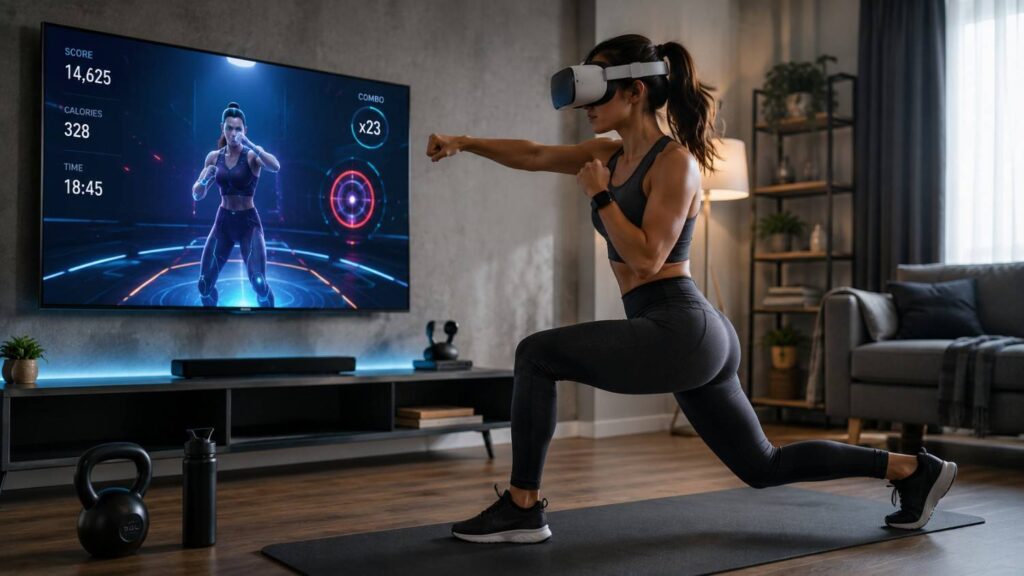
Virtual Reality Workouts: The Future of Fitness
Virtual Reality Workouts: The Future of Fitness is no longer just a futuristic idea for gamers or tech enthusiasts. It has become a practical way for people to exercise at home, stay motivated, and make fitness feel more enjoyable. Instead of standing in front of a screen and following a basic workout video, users can step into a virtual gym, join a boxing session, dance inside an immersive studio, or complete high-energy cardio challenges in a game-like environment.
What makes virtual reality workouts different is the level of engagement. A traditional workout often depends on discipline alone, but VR adds interaction, progress tracking, music, coaching, movement feedback, and visual rewards. That combination can help users stay focused and reduce the boredom that often comes with repetitive exercise routines.
However, VR fitness should be viewed as a smart addition to a balanced fitness lifestyle, not a complete replacement for every type of training. Adults are generally advised to get at least 150 minutes of moderate-intensity physical activity per week, along with muscle-strengthening activities on 2 or more days per week, according to the CDC. Virtual reality exercise can support that goal when used safely, consistently, and alongside strength training, mobility work, and healthy recovery habits.
Why Virtual Reality Workouts Are Growing
Virtual reality workouts are growing because they solve one of the biggest problems in fitness: people often lose interest before they see results. Many users know exercise is important, but they struggle with repetition, lack of time, gym anxiety, or low motivation. VR fitness changes the experience by turning movement into an interactive activity. Instead of counting minutes, users focus on hitting targets, following rhythm, collecting points, reacting to movement cues, and improving their performance.
This shift matters because consistency is the foundation of long-term fitness. A simple workout that someone repeats is more valuable than a perfect workout plan they abandon after one week. VR workouts make consistency easier by combining exercise with entertainment. For beginners, this can reduce the pressure of starting. For busy adults, it can make home workouts more convenient. For people who dislike traditional cardio, it can offer a more enjoyable path to regular movement.
The growth of VR fitness also reflects broader changes in how people use technology. Fitness is becoming more personalized, more flexible, and more experience-driven. Users want workouts that fit into their homes, schedules, comfort levels, and interests. Meta describes Quest fitness as a way to turn a room into a virtual gym and work out through immersive experiences. This shows how the line between gaming, wellness, and home exercise is becoming less separate.
Fitness Feels More Like Play
One of the strongest reasons virtual reality workouts are becoming popular is that they make exercise feel less like a chore. Many people avoid traditional workouts because they associate them with discomfort, boredom, or pressure. VR changes that emotional connection by adding game mechanics, visual progress, goals, levels, music, and real-time feedback. When someone is focused on dodging, punching, dancing, or keeping a rhythm, the workout feels more like an active challenge than a forced routine.
This is where exergaming becomes important. Exergaming means using games or interactive digital experiences that require physical movement. Research on VR exergaming has found that it can engage users in physical activity in a fun, enjoyable, and playful way, often without making exercise feel like the main focus. That matters because enjoyment can influence how often people return to an activity.
In my experience, the best fitness routine is not always the most intense one. It is the one a person can repeat without feeling mentally drained. VR workouts support that by making movement feel rewarding, interactive, and less repetitive. For people who quit normal cardio quickly, this playful structure can be a major advantage.
Home Fitness Is Becoming More Flexible
Home fitness has changed a lot in recent years. People no longer rely only on basic workout DVDs, treadmills, or simple mobile fitness apps. They now want flexible exercise options that fit into small spaces, busy schedules, and different comfort levels. Virtual reality workouts meet that need because they can turn a living room, bedroom, or spare room into an immersive training space.
The biggest benefit is convenience. Users do not need to drive to a gym, wait for equipment, or feel self-conscious in a public workout environment. They can choose a short session before work, a longer cardio class in the evening, or a light movement session on a low-energy day. This flexibility makes VR especially useful for beginners, remote workers, parents, and anyone who wants structured movement without the friction of leaving home.
Another advantage is variety. A person can do boxing one day, dance the next, and a lower-impact rhythm session later in the week. This helps reduce workout boredom and supports better habit formation. While home VR workouts still require a safe play area and proper headset setup, they offer a level of convenience that traditional fitness routines often cannot match.
How Virtual Reality Workouts Work
Virtual reality workouts work by combining physical movement with immersive digital feedback. The user wears a VR headset that displays a 3D environment, while controllers, hand tracking, or sensors detect body movement. When the user punches, reaches, squats, dodges, steps, or turns, the app responds in real time. This creates the feeling of being inside the workout instead of simply watching it.
Most VR fitness apps are built around interactive actions. A boxing app may ask the user to hit targets with accurate timing. A dance app may require full-body rhythm and coordination. A HIIT-style app may guide the user through squats, strikes, lunges, and fast movement patterns. The workout becomes more engaging because the user receives instant feedback on performance, timing, and effort.
This interaction is what separates virtual reality exercise from traditional video-based workouts. In a normal home workout, the screen does not know whether the user is moving correctly or staying active. In VR, the app can respond to movement and make the session feel more personal. FitXR, for example, presents itself as a VR fitness app with studios for Box, Combat, HIIT, Dance, and related workout styles.
The experience is not only about technology. It is also about behavior. VR fitness works best when users choose sessions that match their level, warm up properly, maintain a safe space, and treat the workout as part of a broader routine rather than a one-time novelty.
Headsets, Controllers, and Motion Tracking
A VR workout usually begins with a headset, controllers or hand tracking, and a safe indoor space. The headset creates the immersive environment, while the tracking system follows the user’s movements. When the user moves their arms, turns their body, or reacts to objects inside the virtual environment, the software translates those movements into workout actions.
Motion tracking is one of the most important parts of VR fitness. It allows the app to recognize punches, timing, direction, speed, and sometimes body positioning. This gives the user immediate feedback and makes the workout feel responsive. For example, in a boxing-style session, the app may reward accurate punches and quick reactions. In a rhythm-based workout, the app may score how well the user moves with the beat.
Some apps are also moving toward more natural interaction. FitXR states that it offers workout studios such as Boxing, Combat, HIIT, Dance, and Flow, and its platform focuses on play-based VR fitness experiences. This matters because the more natural the movement feels, the easier it becomes for users to stay engaged.
Still, tracking has limits. Most consumer VR systems track head and hand movement more easily than full-body form. That is why users should still pay attention to posture, control, and safety.
Workout Intensity Can Vary
Not all VR workouts create the same level of intensity. Some sessions are light and playful, while others can feel like a serious cardio workout. The difference depends on the app, class type, pace, duration, music, movement demands, and the user’s effort. A slow beginner rhythm session will not feel the same as a fast VR boxing workout or high-intensity combat class.
This is important because many beginners assume every VR workout is automatically intense. In reality, VR fitness should be selected the same way you would select any exercise routine. Users should consider their current fitness level, health condition, balance, coordination, and comfort inside the headset. If someone is new to exercise, a 10-minute beginner session may be a better start than a 30-minute advanced workout.
A 2024 study examining energy expenditure in two modes of Supernatural showed that VR fitness games can be studied in terms of real workout intensity, not just entertainment value. However, users should avoid making broad assumptions from one app or one session type. The best approach is to build gradually, monitor effort, and choose classes that support long-term consistency.
Mixed Reality Adds Safety and Awareness
Mixed reality fitness is becoming an important part of the future of VR workouts. Traditional VR places the user inside a fully digital environment, while mixed reality blends digital elements with the real physical space. This can help users stay more aware of their room while still enjoying interactive workout elements.
Safety is one of the biggest advantages of mixed reality. When users can see parts of their real environment, they may be better able to avoid furniture, walls, pets, or other people nearby. This does not remove the need for caution, but it can make the experience feel more practical for home workouts. Meta’s safety guidance emphasizes setting up a safe activity space, leaving extra room around the boundary, and keeping the area clear because boundaries may not detect people or pets.
Mixed reality can also make workouts feel more natural. Instead of feeling completely separated from the room, users can interact with digital targets or trainers while still maintaining a sense of their surroundings. As headsets become lighter and pass-through technology improves, mixed reality fitness may become one of the biggest reasons VR moves from a niche fitness option to a mainstream home workout solution.
Benefits of Virtual Reality Fitness
The main benefits of virtual reality fitness are motivation, convenience, variety, privacy, and engagement. These benefits matter because fitness success is rarely about one perfect workout. It is about creating a repeatable routine that users can maintain over time. VR fitness supports that by making exercise more interactive and less predictable.
For people who dislike gyms, VR creates a private space to move without feeling watched. For people who get bored with traditional cardio, it introduces rhythm, scoring, goals, and immersive environments. For beginners, it can make exercise feel more approachable. For more advanced users, it can add variety to a weekly training plan without replacing structured strength work.
Another benefit is accessibility. A person can complete a VR session without traveling, booking a class, or buying large gym equipment. This does not mean VR is free or available to everyone, because headsets and subscriptions can still be a barrier. But for users who already own a headset or are interested in tech-based fitness, VR can make home exercise feel more guided and enjoyable.
The psychological side is also important. When users enjoy the process, they are more likely to repeat it. That is why gamified fitness has become such a strong part of the VR workout conversation. The goal is not only to burn calories. The goal is to build a healthier relationship with movement.
Better Motivation and Consistency
Motivation is one of the biggest reasons people try VR fitness. Traditional workouts can feel repetitive, especially when progress is slow. VR workouts add a layer of interaction that can make users want to return. Scores, streaks, class variety, music, virtual coaches, and progress feedback all help create a sense of momentum.
Consistency improves when the workout feels rewarding. A person may not feel excited about running on a treadmill, but they may look forward to beating yesterday’s score in a VR boxing class. That shift is powerful because it changes exercise from a task into an experience. In many cases, users are not thinking only about effort. They are thinking about timing, rhythm, reaction, and improvement.
In my experience, motivation works best when it is supported by structure. VR can make workouts fun, but users still need a realistic plan. A beginner may start with three short sessions per week, while a more experienced user may use VR for cardio on non-lifting days. This keeps excitement from turning into burnout. When used properly, virtual reality workouts can help users build a routine that feels less forced and more sustainable.
More Confidence for Beginners
Many beginners avoid exercise because they feel unsure, embarrassed, or overwhelmed. Gyms can feel intimidating when someone does not know how to use equipment or follow a class. VR fitness can reduce that pressure by creating a private environment where users can practice movement at their own pace.
This privacy is one of the most underrated benefits of virtual reality exercise. A user can make mistakes, pause, restart, choose beginner difficulty, and learn without feeling judged. That can be especially helpful for people returning to fitness after a long break. Instead of comparing themselves to others, they can focus on their own progress.
Research has also explored VR exergames in different groups, including older adults. A meta-analysis on VR exergames and older adults found potential positive effects on areas such as cognition, memory, and depression, although VR should not be treated as a replacement for medical care or supervised therapy.
For beginners, the main value is confidence. Once a person feels comfortable moving regularly, they may become more open to strength training, walking, group classes, or other forms of exercise. VR can be a starting point that builds momentum.
Useful Variety for Cardio Training
Cardio training is often where people struggle with boredom. Running, cycling, and treadmill workouts can be effective, but not everyone enjoys them. VR fitness apps offer a different approach by turning cardio into boxing, dancing, rhythm games, combat drills, and immersive challenges. This variety can make cardiovascular exercise feel more exciting and less repetitive.
FitXR highlights studios such as Box, Combat, HIIT, Dance, and Flow, showing how VR fitness platforms are building multiple workout styles into one ecosystem. This variety allows users to adjust workouts based on mood, energy, and fitness goals. A high-energy day may include combat or HIIT. A lighter day may include dance or flow-style movement.
Variety also helps reduce mental fatigue. When people repeat the exact same workout too often, they may lose interest. Rotating workout styles keeps the routine fresh and helps different movement patterns stay active. However, users should still balance VR cardio with strength work, mobility, and rest. VR is a strong cardio tool, but a complete routine should train the body in more than one way.
Limitations and Safety Considerations
Virtual reality workouts can be effective and enjoyable, but they also come with limitations that users should understand before starting. The most important limitation is that VR fitness is not automatically balanced. Many VR workouts focus heavily on upper-body movement, cardio, rhythm, and reaction speed. While that can be useful, it may not fully replace lower-body strength training, progressive resistance, flexibility, or outdoor activity.
Safety is another key concern. VR workouts happen while the user is wearing a headset, which means their view of the real environment is limited. Even with boundary systems, users can still move too close to walls, furniture, pets, or other people. Meta advises users to leave extra space around their boundary and keep their play area clear, noting that boundaries may not detect people or pets.
Comfort also matters. Headsets can feel warm during workouts, and some people may experience dizziness or motion sensitivity. Users should start slowly, take breaks, clean the headset after sweating, and stop if they feel unwell.
The best way to use VR fitness is responsibly. Treat it like a real workout, not just a game. Warm up, choose the right intensity, stay aware of physical limits, and combine it with other forms of movement. That balanced approach makes virtual reality workouts safer, more useful, and more sustainable.
| Safety Area | Recommended Practice | Why It Matters |
|---|---|---|
| Play Space | Clear furniture, pets, cables, and obstacles | Reduces the risk of collisions and falls |
| Boundary Setup | Enable the headset’s safety boundary | Helps keep workouts within a safe area |
| Session Length | Start with 10–15 minute sessions | Allows the body to adapt gradually |
| Hydration | Keep water nearby | Prevents dehydration during exercise |
| Headset Comfort | Adjust the fit and clean the face cover | Improves comfort and hygiene |
| Breaks | Take regular breaks during longer workouts | Reduces fatigue and motion discomfort |
| Workout Intensity | Choose classes that match your fitness level | Helps prevent overexertion |
| Stop if Unwell | End the session if you feel dizzy or nauseous | Supports user safety and injury prevention |
VR Should Not Replace Every Type of Training
VR workouts are excellent for cardio, movement confidence, coordination, and motivation, but they should not replace every type of fitness training. A complete fitness plan usually includes aerobic activity, strength training, mobility, balance, recovery, and lifestyle habits. VR can support some of these areas, but it does not cover all of them equally.
For example, many VR fitness sessions involve punching, reaching, and upper-body movement. These can raise the heart rate, but they may not provide enough resistance to build strength in the legs, back, chest, or major muscle groups. The CDC recommends adults include muscle-strengthening activities on at least 2 days per week, in addition to aerobic activity. This is why users should not rely only on VR if their goals include strength, muscle growth, posture improvement, or injury prevention.
A better strategy is to combine VR with simple resistance training. This could include bodyweight exercises, dumbbells, resistance bands, gym workouts, or guided strength sessions outside the headset. VR can handle the fun cardio part, while traditional strength training builds the foundation. This combination gives users the benefits of both modern technology and proven training principles.
Safe Play Space Is Essential
A safe play space is one of the most important requirements for VR fitness. Unlike normal workouts, VR workouts can involve quick turns, wide arm swings, side steps, squats, ducks, and fast reactions while the user’s eyes are covered by the headset. That creates a higher risk of bumping into objects if the space is not prepared properly.
Before starting any session, users should remove furniture obstacles, loose rugs, cables, glass items, sharp corners, toys, and anything that can cause tripping. Pets and children should stay outside the workout space. The user should also check ceiling height if the workout includes overhead movements. Even a small room can work if the selected workout is appropriate, but intense sessions need more space.
Meta’s Quest safety guidance recommends leaving extra space around the activity area and keeping the play area clear because the boundary system may not detect every person, pet, or object. This is especially important for boxing and combat workouts where arm movement can be fast and forceful.
One thing I always recommend is doing a quick “arm reach test” before wearing the headset. Stand in the center of the space, extend your arms in all directions, and make sure nothing is within striking distance.
Comfort and Motion Sensitivity Matter
Comfort can strongly affect the quality of a VR workout. A user may enjoy the app but stop using it if the headset feels heavy, hot, or uncomfortable during exercise. Sweating, lens fogging, strap pressure, and motion sensitivity are common issues for some users. These problems do not make VR fitness unusable, but they should be managed properly.
Beginners should start with short sessions. A 10-minute workout is enough for the first few attempts. This gives the body time to adjust to the headset, movement, and visual environment. If dizziness, nausea, eye strain, headache, or disorientation appears, the user should stop immediately and rest. It is not smart to “push through” VR discomfort.
Headset hygiene is also important. Fitness sessions create sweat, so users should clean face covers and controllers regularly. A washable or wipeable face interface can make the experience more comfortable. Users should also adjust the headset fit before exercising so it stays secure without creating too much pressure.
Privacy and app permissions should not be ignored either. VR platforms may involve accounts, tracking, fitness data, and social features. Users should review privacy settings before joining communities or sharing performance data.
Best Types of VR Workouts to Try
The best VR workouts depend on the user’s goal, fitness level, available space, and comfort with movement. A beginner may benefit from short rhythm or dance sessions, while an experienced user may prefer boxing, combat, or HIIT. Someone who wants low-impact movement may choose flow-style workouts or guided mobility sessions. The key is to select sessions that match the body’s current ability rather than chasing the hardest class immediately.
VR fitness is useful because it offers different workout personalities. Boxing feels powerful and reactive. Dance feels expressive and musical. HIIT feels challenging and structured. Rhythm games feel playful and fast-paced. Mobility sessions feel calmer and more controlled. This variety allows users to build a weekly routine that feels less repetitive than traditional cardio.
Still, variety should be used with intention. If a user only chooses high-intensity sessions, fatigue may build quickly. If they only choose light sessions, they may not reach their fitness goals. A smart plan includes a mix of intensity levels. For example, a week may include one boxing session, one dance workout, one lighter movement session, and two strength-training days outside VR.
Beginners should focus on comfort and habit first. Advanced users can focus more on intensity, performance, and longer sessions. In both cases, safety and consistency matter more than chasing maximum effort every day.
| VR Workout Type | Best For | Typical Intensity | Suitable for Beginners? |
|---|---|---|---|
| Boxing | Cardio, coordination, stress relief | High | Yes (beginner classes) |
| Combat | Full-body conditioning | Moderate to High | Yes (start slowly) |
| HIIT | Calorie burn, endurance | High | No, unless using beginner sessions |
| Dance | Fun cardio, rhythm, mobility | Moderate | Yes |
| Rhythm-Based Workouts | Daily movement and motivation | Low to Moderate | Yes |
| Sculpt | Muscle endurance and toning | Moderate | Yes |
| Mobility & Stretching | Recovery and flexibility | Low | Yes |
| Guided Beginner Classes | Learning VR fitness basics | Low | Yes |
Boxing, Combat, and HIIT Workouts
Boxing, combat, and HIIT are among the most popular types of VR workouts because they feel active, energetic, and easy to understand. Users punch targets, block, dodge, move with rhythm, and respond quickly to visual cues. These movements can raise the heart rate and create a strong sense of physical effort, especially when the session is fast-paced.
Les Mills describes BODYCOMBAT as a high-energy, martial-arts-inspired workout designed to improve fitness, agility, and speed through non-contact kicking and punching movements. This type of format works well in VR because the user can perform combat-style movement without needing a partner, punching bag, or gym space.
However, beginners should be careful with intensity. It is easy to get excited and throw punches too hard, especially when the app feels like a game. Poor control can lead to shoulder, wrist, elbow, or back discomfort. Users should focus on smooth movement, controlled punches, stable foot placement, and proper warm-up. HIIT and combat sessions are best used a few times per week rather than every day, especially for new users.
Dance, Rhythm, and Movement Games
Dance, rhythm, and movement games are ideal for users who want exercise to feel fun, expressive, and less formal. These workouts often use music, timing, visual cues, and scoring systems to encourage movement. Instead of thinking about sets and reps, users focus on staying with the beat, hitting targets, and completing patterns.
This type of VR workout can be especially helpful for people who dislike traditional cardio. A person may not enjoy running, cycling, or treadmill intervals, but they may enjoy moving to music inside an immersive environment. That enjoyment can increase the chances of repeating the workout regularly.
Rhythm-based sessions can also improve coordination and reaction time. Users often need to move both arms, shift weight, respond quickly, and maintain timing. The intensity can vary depending on the speed, song, and movement pattern. Some sessions are light and playful, while others become surprisingly demanding.
The best way to use dance and rhythm workouts is to rotate them with other training styles. They can work well as moderate cardio days, warm-up sessions, or motivation boosters when the user does not feel like doing a traditional workout.
Mobility, Warm-Ups, and Light Sessions
Not every VR workout needs to be intense. Mobility, warm-up, and light movement sessions are important because they help users build consistency without overloading the body. Beginners often make the mistake of starting too aggressively, then feeling sore, tired, or discouraged. Light sessions provide a better entry point.
A short low-impact VR workout can help users get comfortable with the headset, learn movement patterns, and understand how their body responds. These sessions are also useful on recovery days when the goal is to move gently rather than train hard. Even advanced users can benefit from lighter VR movement because it helps maintain the habit without adding too much fatigue.
Warm-up sessions are especially useful before boxing, combat, or HIIT. The body needs time to prepare for quick punches, squats, side steps, and reaction-based movement. A simple warm-up can reduce stiffness and improve control.
Mobility-focused VR sessions may also support posture awareness, balance, and movement confidence, depending on the app design. They should not replace professional physical therapy or medical guidance, but they can be a useful part of a broader wellness routine.
VR Workouts vs Traditional Fitness
VR workouts and traditional fitness both have value, but they serve slightly different purposes. Traditional fitness includes gym training, outdoor running, cycling, swimming, sports, strength training, yoga, Pilates, and group classes. These methods are proven, flexible, and often better for structured strength development. VR workouts, on the other hand, are especially strong in engagement, convenience, entertainment, and habit-building.
The main difference is experience. Traditional workouts often require users to create their own motivation or follow a coach in a physical space. VR workouts create a digital environment that guides the user through interactive movement. This can make exercise feel more exciting, especially for users who struggle with boredom.
However, VR has limits. Most VR systems are not designed to replace barbells, resistance machines, swimming pools, sports fields, or outdoor endurance training. They are better viewed as a powerful cardio and movement tool. A user who wants to improve heart health, increase activity, and enjoy home workouts may benefit greatly from VR. A user who wants to build significant muscle or improve sport-specific performance will still need traditional training.
The best choice is not always VR versus the gym. For many people, the best choice is both. VR can make cardio easier to repeat, while traditional training can build strength, mobility, and long-term physical capacity.
Feature Comparison Table
| Factor | VR Workouts | Traditional Fitness |
|---|---|---|
| Motivation | Uses gamification, scoring, immersive environments, and real-time feedback | Depends on personal discipline, coaching, group energy, or routine |
| Cardio Potential | Can support moderate to vigorous cardio depending on app and effort | Strong cardio options include running, cycling, rowing, swimming, and classes |
| Strength Training | Limited unless paired with bodyweight or resistance tools | Better for progressive overload, machines, weights, and structured strength plans |
| Beginner Comfort | Private, flexible, and less intimidating for many users | Can feel intimidating in gyms or group class environments |
| Space Needed | Requires a clear indoor activity area | Can require gym access, outdoor space, or home equipment |
| Variety | Offers boxing, dance, rhythm, HIIT, combat, and immersive challenges | Offers broader options including weights, sports, yoga, Pilates, and endurance |
| Safety Needs | Requires boundary setup, clear space, headset comfort, and breaks | Requires equipment safety, good form, and injury prevention awareness |
| Best Use | Fun cardio, habit building, home fitness, and motivation | Strength, endurance, mobility, sports performance, and full-body programming |
This comparison shows that virtual reality workouts are not a full replacement for every traditional fitness method. They are strongest when used for motivation, cardio, and consistency. Traditional fitness remains stronger for progressive strength, advanced athletic goals, and full-body physical development.
When to Combine VR with Gym or Outdoor Training
Combining VR with gym or outdoor training is often the smartest approach. VR can make cardio more enjoyable, while gym and outdoor workouts can provide strength, endurance, fresh air, and functional movement. This balanced routine helps users avoid overusing one type of exercise.
For example, someone may use VR boxing on Monday, strength training on Tuesday, a dance-based VR workout on Thursday, and a long walk or outdoor cycle on Saturday. This structure gives variety without making the routine complicated. It also supports different parts of fitness: cardiovascular endurance, muscle strength, coordination, and recovery.
Outdoor movement has benefits that VR cannot fully duplicate. Walking outside, running on real terrain, or playing sports develops spatial awareness and exposes users to natural movement patterns. Gym training provides progressive resistance, which is important for building and maintaining muscle.
VR becomes most valuable when it fills the motivation gap. If a user normally skips cardio because it feels boring, VR can make that part easier to complete. Instead of asking whether VR can replace the gym, a better question is: where can VR make the routine more consistent?
How to Start a Safe VR Fitness Routine
Starting a safe VR fitness routine requires more than downloading an app and jumping into the hardest workout. Users need to prepare their space, choose beginner-friendly sessions, understand headset comfort, and build intensity gradually. This is especially important for people who are new to exercise, returning after a long break, or unfamiliar with VR.
The first step is choosing a realistic goal. A beginner should not focus only on calories or weight loss. A better starting goal is consistency: complete two or three short sessions per week and learn how the body responds. Once the habit feels stable, users can increase duration, intensity, or frequency.
The second step is safety. Before every workout, the activity space should be checked. Furniture, cables, rugs, pets, and fragile objects should be removed from the movement area. Meta’s safety guidance recommends keeping a clear activity space and leaving extra room around boundaries, especially near walls and objects.
The third step is recovery. VR workouts can feel like games, but they still stress the body. Users should warm up, hydrate, take breaks, and avoid intense sessions every day. A safe routine is one that the user can repeat comfortably over time.
Step-by-Step Beginner Setup
A beginner VR fitness setup should be simple, safe, and easy to repeat. First, choose a headset and install apps only from official stores or trusted platforms. This reduces the risk of unsafe downloads and ensures the app is designed for the device. Next, clear the workout area completely. Remove chairs, tables, cables, sharp objects, and anything that could cause a fall or collision.
After clearing the space, set the headset boundary according to the device instructions. Do not make the boundary too close to walls or furniture. Leave a buffer so quick movement does not result in accidental contact. Then choose a beginner workout under 10 to 15 minutes. The goal of the first session is not maximum performance. The goal is to test comfort, balance, movement, and headset fit.
Keep water nearby and take breaks when needed. If dizziness, nausea, blurred vision, headache, or unusual discomfort appears, stop immediately. After the session, clean the headset and controllers, especially if there was sweating. Finally, write down how the workout felt. Tracking comfort and effort helps users choose better sessions in the future.
Simple Weekly VR Fitness Plan
A simple weekly VR fitness plan should include variety, recovery, and strength training outside the headset. Beginners can start with three VR workouts per week. For example, Monday can be a beginner boxing or rhythm workout, Wednesday can be a light dance or movement session, and Friday can be a slightly more challenging cardio class. This gives enough activity to build consistency without overwhelming the body.
On two other days, users can add basic strength training. This may include squats, wall push-ups, resistance band rows, glute bridges, planks, or light dumbbell work. The goal is to train major muscle groups that VR cardio may not fully challenge. This supports the CDC recommendation that adults include muscle-strengthening activities on at least 2 days per week.
Rest days are also important. A light walk, stretching session, or mobility routine can support recovery without breaking the habit of movement. After two to three weeks, users can increase session length or intensity slowly. A sustainable plan should feel challenging but manageable. If the plan causes soreness, fatigue, or dread, it is too aggressive.
What the Future of Fitness Looks Like with VR
The future of fitness with VR is likely to be hybrid, personalized, and more immersive. Gyms, outdoor exercise, personal trainers, sports, and traditional strength training will continue to matter. However, VR will become a stronger part of the fitness ecosystem because it solves problems that traditional exercise often struggles with: boredom, lack of motivation, convenience, and intimidation.
As headset technology improves, VR workouts may become lighter, more comfortable, and more realistic. Better motion tracking could help apps understand body movement more accurately. Mixed reality may allow users to train in their real rooms while seeing digital coaches, targets, or performance cues. More advanced data integration could connect heart rate, effort, recovery, and progress into smarter workout recommendations.
The future will also depend on app ecosystems. VR fitness apps need fresh content, good coaching, safe movement design, privacy protection, and fair pricing. Users should choose platforms that provide clear value and do not rely only on hype.
Supernatural, for example, announced that it is returning as an independent company, with a new chapter for VR fitness planned for fall 2026. This shows that the VR fitness market is still changing. Some apps may disappear, relaunch, or evolve. That is why users should build flexible habits rather than depend on one single platform.
More Personalization and Smarter Coaching
Personalization will be one of the biggest improvements in future VR fitness. Current apps can already offer class levels, scoring, workout categories, and performance feedback. In the future, they may become better at adjusting workouts based on heart rate, movement quality, fatigue, goals, and user preferences.
Smarter coaching could help beginners avoid doing too much too soon. For example, an app may suggest a lower-impact session if the user has completed several intense workouts in a row. It may also recommend warm-ups, recovery days, or strength-supporting exercises outside VR. This would make VR fitness more useful as a long-term training tool rather than only an entertainment product.
Better tracking could also improve form feedback. Many current VR workouts track head and hand movement, but full-body accuracy remains limited. As sensors improve, future systems may better understand squats, lunges, posture, and lower-body movement. This would make virtual reality exercise more complete and safer.
The key will be responsible design. More data does not automatically mean better fitness. Apps should use personalization to support health, safety, and consistency, not pressure users into overtraining.
App Ecosystems Will Keep Changing
The VR fitness app market is still developing, which means users should expect changes. Some apps will grow, some will change pricing, some will add mixed reality, and others may stop receiving updates. This is normal in a young technology category, but it creates an important lesson for users: do not build your entire fitness routine around one app only.
A strong VR fitness routine should be flexible. Users may enjoy one primary app, but they should also have backup options. These can include other VR fitness apps, non-VR workout videos, walking, gym workouts, or simple bodyweight routines. This prevents disruption if an app changes direction or becomes unavailable.
Supernatural’s return as an independent company in fall 2026 is a good example of how quickly the market can shift. Its official website states that a new chapter for VR fitness is planned and that coaches and community features are central to the relaunch.
For users, the practical takeaway is simple: choose apps that fit your goals today, but keep your fitness identity bigger than one platform. The goal is not to be loyal to an app. The goal is to keep moving consistently.
Will VR Replace the Gym?
VR will not completely replace the gym for everyone, but it can replace certain gym activities for certain users. For example, someone who goes to the gym only for basic cardio may find VR workouts more enjoyable and convenient. A person who dislikes treadmill sessions may prefer boxing, rhythm games, or immersive HIIT at home.
However, gyms still provide major advantages. They offer heavy weights, machines, group classes, coaching, swimming pools, sports facilities, and social accountability. These are difficult for VR to fully duplicate. Strength training, in particular, remains one of the strongest reasons to keep traditional fitness in the routine.
The better way to think about Virtual Reality Workouts: The Future of Fitness is not as a replacement story. It is an expansion story. VR gives people another way to move. It can help beginners start, help busy people stay consistent, and help cardio feel less boring.
For some users, VR may become their main form of exercise. For others, it will be a supplement. Both approaches can work if the routine is safe, balanced, and consistent.
Quick Answer About Virtual Reality Workouts: The Future of Fitness
Virtual Reality Workouts: The Future of Fitness refers to exercise experiences powered by VR headsets, motion tracking, interactive coaching, and immersive digital environments. Instead of simply watching a workout, users actively move inside the experience. They may punch targets, dodge obstacles, follow dance steps, complete HIIT drills, or train with virtual instructors. This makes fitness feel more like play, which can improve motivation and consistency.
The biggest reason VR fitness is gaining attention is that it removes many common barriers to exercise. People can train at home, avoid crowded gyms, choose beginner-friendly sessions, and enjoy workouts that feel less repetitive. Some VR fitness games can reach moderate to vigorous intensity, depending on the app, duration, and user effort. A 2024 study on the VR fitness game Supernatural examined energy expenditure in Flow and Boxing modes, showing that certain VR fitness sessions can create meaningful physical effort.
Still, VR workouts are not perfect for every goal. They are excellent for cardio, coordination, movement confidence, and habit building, but they may not provide enough progressive strength training by themselves. The best approach is to use virtual reality workouts as part of a complete routine that includes resistance training, walking, stretching, rest, and proper safety setup.
Frequently Asked Questions
Virtual Reality Workouts: The Future of Fitness raises many practical questions because the topic sits between technology, health, gaming, and home fitness. People want to know whether VR workouts are effective, whether they can support weight loss, what equipment they need, and whether VR can replace gym workouts. These questions are important because users should understand both the benefits and limits before investing time or money.
The answers below are designed for beginners as well as users who already own a VR headset and want to use it more seriously for fitness. The main point is that VR workouts can be useful, but they should be approached like real exercise. That means choosing the right intensity, preparing the space, taking breaks, and combining VR with other healthy habits.
It is also important to avoid exaggerated claims. VR fitness is not a miracle solution. It can improve motivation, increase movement, and make cardio more enjoyable, but long-term results still depend on consistency, nutrition, recovery, strength training, and overall lifestyle. When used wisely, VR can become a powerful tool in a modern home fitness routine.
Are virtual reality workouts effective?
Yes, virtual reality workouts can be effective, especially for cardio, coordination, movement confidence, and exercise consistency. Their effectiveness depends on the type of workout, session duration, app design, user effort, and fitness level. A calm rhythm session may provide light activity, while a fast boxing or combat workout can feel much more intense.
Research has also started examining VR fitness more seriously. A 2024 study on Supernatural measured energy expenditure in two VR fitness modes, showing that certain VR workout formats can create meaningful physical effort. However, users should not assume every VR app or every class produces the same result.
The best way to make VR workouts effective is to use them consistently, choose the right difficulty, and combine them with strength training and recovery. VR is most useful when it helps a person move more often.
Can VR workouts help with weight loss?
VR workouts can support weight loss by increasing physical activity and helping users burn more energy. However, weight loss depends on more than exercise. Nutrition, sleep, stress, daily movement, consistency, and overall calorie balance all matter. VR fitness should be seen as one helpful part of a larger plan, not a standalone solution.
The advantage of VR is that it may help people stay active more regularly because the workout feels enjoyable. If someone avoids traditional cardio but enjoys VR boxing or dance workouts, they may move more often throughout the week. That consistency can support weight management over time.
Still, users should avoid relying only on calorie estimates inside apps. Wearables and app trackers can be useful, but they are not always perfectly accurate. Focus first on building a routine, increasing weekly movement, and making sustainable nutrition choices. Those habits matter more than chasing one high-calorie session.
What equipment do I need for VR fitness?
To start VR fitness, users usually need a compatible VR headset, controllers or hand tracking, a safe indoor space, and a fitness app. Some apps may require a subscription or in-app purchase, while others may offer one-time purchases or free trials. Users should always download apps from official stores or trusted sources.
A clear workout space is just as important as the headset. VR fitness often includes arm swings, turns, side steps, squats, and fast reactions. The area should be free from furniture, pets, loose cables, glass items, and tripping hazards. Meta recommends leaving extra room around the activity boundary and keeping the area clear.
Optional accessories can improve comfort. These may include a sweat-resistant face cover, lens cloth, controller grips, exercise mat, water bottle, and heart-rate monitor. None of these replace safe movement, but they can make regular VR workouts more comfortable.
Are VR workouts safe for beginners?
VR workouts can be safe for beginners when they are started carefully. The most important steps are choosing beginner-friendly sessions, clearing the room, setting the safety boundary, and taking breaks. Beginners should avoid advanced combat, boxing, or HIIT classes until they understand how their body responds inside the headset.
The first few workouts should be short. A 10-minute session is enough to test headset comfort, balance, coordination, and movement control. If the user feels dizzy, nauseous, unstable, or uncomfortable, they should stop immediately. VR discomfort should not be ignored.
Meta’s safety guidance emphasizes preparing the activity space, reviewing health and safety information, and keeping the play area clear. This is especially important for beginners because they may not yet understand how much they move during immersive workouts.
A safe beginner routine should feel controlled, not chaotic. Build intensity slowly, warm up first, and treat VR fitness like real physical activity.
What are the best VR workouts for beginners?
The best VR workouts for beginners are short, simple, low-impact, and easy to follow. Beginner dance sessions, light rhythm games, basic boxing, and guided movement classes are often good starting points. The goal is not to choose the hardest workout. The goal is to build confidence and consistency.
Beginners should avoid workouts that require fast spinning, complex footwork, or long high-intensity intervals at the start. These can feel overwhelming and may increase discomfort. Instead, choose sessions that explain movement clearly and allow enough time to react.
A good beginner plan may include two or three short VR sessions per week. After a few weeks, users can gradually increase duration or difficulty. It also helps to rotate workout types. For example, use boxing one day, dance another day, and a light movement session later in the week.
The best beginner workout is the one that feels safe, enjoyable, and repeatable. Consistency is more important than intensity in the early stage.
Can VR workouts replace gym workouts?
VR workouts can replace some gym workouts, especially basic cardio sessions, but they should not replace every type of gym training for everyone. VR is excellent for motivation, movement, rhythm, and home cardio. However, gyms are still better for progressive strength training, heavy resistance, machines, and supervised coaching.
Adults are advised to include both aerobic activity and muscle-strengthening activity in their weekly routines. The CDC recommends at least 150 minutes of moderate-intensity physical activity per week and 2 days of muscle-strengthening activities. VR can help with the activity side, but users may still need resistance training for a complete routine.
For many people, the best answer is a hybrid approach. Use VR to make cardio fun and use gym or home strength training to build muscle and joint support. This gives the benefits of both technology and traditional fitness.
What is exergaming?
Exergaming is a combination of exercise and gaming. It refers to games or interactive digital experiences that require physical movement. In VR fitness, exergaming may include boxing, dancing, squatting, dodging, reaching, balancing, or reacting to visual targets. The user is not just pressing buttons. They are moving their body.
The reason exergaming works well for many users is that it shifts attention away from the discomfort of exercise. Instead of focusing only on effort, the user focuses on the game objective. This can make workouts feel shorter and more enjoyable.
Research on VR exergaming has found that it can engage users in physical activity through fun and playful experiences. That does not mean every exergame is a complete workout, but it shows why this category is important. Exergaming can help people move more often by making movement feel rewarding.
Conclusion
Virtual Reality Workouts: The Future of Fitness represents a major shift in how people can approach exercise. Instead of relying only on discipline, gym access, or traditional cardio routines, users can enter immersive environments that make movement more engaging and easier to repeat. VR fitness can support cardio, coordination, motivation, confidence, and home workout consistency.
The biggest strength of VR workouts is enjoyment. When exercise feels interactive and rewarding, users are more likely to return. That can make a real difference for beginners, busy professionals, and people who struggle with boring workout routines. At the same time, VR should be used realistically. It does not replace every form of training, and it should be combined with strength work, mobility, outdoor movement, recovery, and safe setup habits.
The future of fitness will likely be hybrid. Gyms, personal trainers, sports, and outdoor exercise will remain important, but VR will continue to grow as headsets improve and apps become more personalized. For anyone looking for a fun and modern way to move more, virtual reality workouts can be a smart and motivating place to start.