
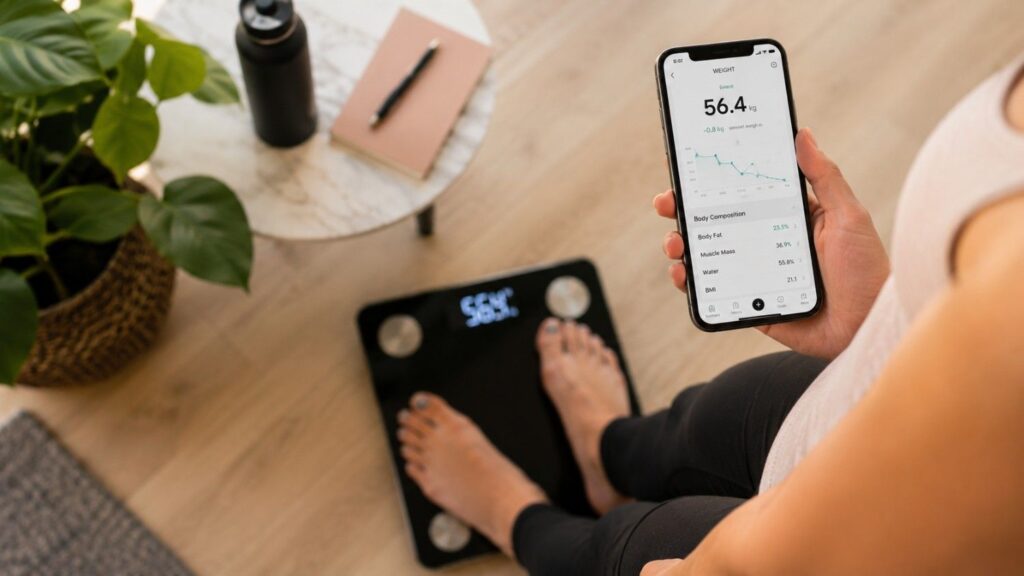
How to Use Smart Scales to Track Your Weight Loss
Learning how to use smart scales to track your weight loss can make progress monitoring more organized, objective, and convenient. A connected scale records measurements automatically, stores them in an app, and presents changes through graphs or trend lines. This removes the need to remember previous readings or maintain a separate paper log. For people following a nutrition, exercise, or medically supervised weight-management plan, that consistent record can make it easier to notice patterns that would otherwise be missed.
However, the technology is only as useful as the routine behind it. Weighing at random times, moving the device between different floor surfaces, entering incorrect profile details, or comparing morning and evening readings can create misleading results. It is equally unhelpful to treat every small rise or fall as proof that a plan is succeeding or failing. Body weight naturally changes from day to day, even when body fat is moving in the desired direction.
A smart scale should therefore support healthy decision-making rather than control it. It cannot produce weight loss on its own, diagnose a health condition, or replace professional assessment. Sustainable weight management still depends on nutrition, physical activity, sleep, stress management, medications, hormones, medical conditions, and other individual factors. The Centers for Disease Control and Prevention notes that gradual weight loss of about one to two pounds per week is generally more likely to be maintained than faster loss, while also emphasizing the importance of realistic goals and supportive lifestyle habits.
The most effective approach is to use the scale as one part of a wider monitoring system. By measuring under repeatable conditions, focusing on averages, and combining scale data with other indicators, you can turn a stream of numbers into practical information. The following sections explain what a smart scale actually measures, how to set it up, how to interpret its readings, and how to use the results without being misled by normal fluctuations.
What Does a Smart Scale Measure?
A smart scale combines the basic function of a digital bathroom scale with wireless connectivity and software-based analysis. Its load sensors directly measure the force placed on the platform and convert that force into a body-weight reading. Bluetooth- or Wi-Fi-enabled models then send the reading to a companion app, where it may be stored, charted, averaged, and combined with other health or fitness information. This automatic record is the feature that makes a smart weight scale particularly useful for long-term progress monitoring.
Many models also display body-fat percentage, muscle mass, lean mass, body water, bone mass, visceral-fat ratings, body mass index, or estimated metabolic measures. These extra figures can make the device appear highly precise, but they are not all measured in the same way. Weight is obtained directly through the scale’s sensors, while most body-composition values are calculated from electrical resistance and profile information. Some outputs are even derived from other estimates, which means several displayed numbers may depend on the same underlying calculation.
Understanding this distinction prevents a common mistake: treating every figure on the dashboard as equally accurate. A consumer smart scale can be very effective for detecting whether body weight is trending upward, downward, or remaining stable. Its body-composition features are better viewed as supporting indicators that may help identify broad patterns. They should not be used to diagnose disease, confirm an exact body-fat percentage, or replace professional methods such as DEXA when clinical precision is required. The practical goal is not to collect the largest number of metrics, but to identify which measurements are sufficiently consistent to guide sensible decisions.
| Measurement | What It Shows | Why It Matters for Weight Loss |
|---|---|---|
| Body Weight | Your total body weight | The most reliable metric for tracking long-term weight-loss progress. |
| Body Fat Percentage | Estimated proportion of body fat | Helps monitor fat-loss trends instead of focusing only on body weight. |
| Muscle Mass | Estimated amount of muscle | Useful for checking whether muscle is being maintained during weight loss. |
| Body Water | Estimated hydration level | Hydration changes can temporarily affect weight and body-composition readings. |
| Bone Mass | Estimated bone mineral content | Mainly used as a reference value and changes very slowly over time. |
| BMI | Weight relative to height | Provides a general weight category but does not measure body composition. |
Body Weight Is the Main Measurement
Body weight is the most direct and generally the most dependable measurement produced by a consumer smart scale. Internal load cells detect pressure on the platform, convert it into a numerical reading, and send the result to the companion app. When the device is used on a hard, level surface under similar conditions, it can provide consistent data for long-term tracking.
A 2021 study comparing three commercial smart scales with dual-energy X-ray absorptiometry found that the devices measured body weight reasonably well, although their body-composition estimates were not accurate enough to replace clinical assessment. For weight-loss monitoring, this means body weight should remain the primary scale-based metric.
Interpret it through averages rather than isolated readings. Sodium, carbohydrate intake, digestion, exercise recovery, travel, constipation, and menstrual-cycle changes can temporarily raise or lower the number without reflecting an equivalent change in body fat. A weekly average reduces the influence of those factors. When the average moves gradually in the intended direction across several weeks, it provides stronger evidence of progress than any single morning measurement.
Body Composition Is Estimated Through BIA
Most body-composition scales use bioelectrical impedance analysis, usually called BIA. During a measurement, the device sends a very small electrical current through the lower body and records the resistance it encounters. Because water-rich tissue and fat conduct electricity differently, the scale combines this resistance with profile details such as height, age, and sex to estimate body fat, lean mass, muscle mass, and body water.
The process is convenient, but the result is still an algorithmic estimate. Hydration, recent food or drink, exercise, sweating, skin temperature, alcohol, illness, foot position, and electrode contact can all influence the reading. Different brands may also report different percentages because they use different equations.
Use BIA values to observe broad patterns over four or more weeks, not to judge a single day. If weight decreases gradually while estimated muscle mass remains relatively stable, the trend may support the idea that fat is being lost while lean tissue is being preserved. Exact confirmation, however, requires a validated professional assessment rather than a home scale.
How to Set Up a Smart Scale Correctly
Correct setup is essential because even a well-designed scale can produce confusing data when the surface, profile, connection, or user assignment is wrong. Begin by reading the manufacturer’s instructions rather than assuming that every model works identically. Some scales need batteries installed in a particular order, an initial calibration step, a brief tap before use, or a firmware update through the companion app. Completing these steps before your first official measurement helps create a cleaner baseline.
Choose a permanent location that is convenient enough to support a repeatable routine. A bathroom or bedroom may work well, provided the floor is hard, level, and dry. Avoid moving the scale between rooms because different surfaces can alter how the load sensors respond. If you do relocate it, follow the device’s recalibration instructions before treating the next number as comparable with earlier readings.
Next, create a separate and accurate profile for every regular user. Body-composition algorithms depend partly on height, age, sex, and selected modes, so incorrect information may distort estimated fat, muscle, or water values. Multi-user households should also check how the app distinguishes people with similar weights and how to reassign a measurement that is attached to the wrong account.
Finally, confirm that syncing works before beginning a tracking plan. Take a test reading, open the app, and verify the date, time, measurement unit, user profile, and displayed metrics. Review permissions before connecting the manufacturer’s app to Apple Health, Google Fit, Health Connect, or another platform. A careful setup takes only a few minutes, but it prevents weeks of duplicated, missing, or incorrectly assigned data.
Place the Scale on a Hard, Flat Surface
Place the scale on tile, wood, concrete, laminate, or another firm surface that does not compress. Thick carpet, rugs, foam mats, flexible flooring, and uneven grout lines can interfere with the load sensors and produce inconsistent readings. Unless the manufacturer supplies approved carpet feet, avoid using the device on a soft surface.
Make sure all four feet sit fully supported and that the platform does not rock when pressure is applied. Keep it away from walls, cabinets, or objects that may touch the edge and alter how force is distributed. The area should also remain dry to reduce slipping and protect the electronics.
Once you have selected a suitable location, leave the scale there. Moving it between rooms can introduce small differences and may require recalibration. If relocation is unavoidable, follow the reset instructions in the manual before recording a new official measurement. Before each weigh-in, check that the display starts at zero and that the device feels stable. Consistent placement improves repeatability, which is more valuable for trend analysis than chasing a supposedly perfect reading.
Complete Your Personal Profile Accurately
Enter your personal information carefully when creating the scale profile. Height, age, sex, and sometimes activity level are used by the body-composition algorithm, so an incorrect entry can distort estimates even when the weight reading is correct. Check whether the app expects centimetres or feet and inches, kilograms or pounds, and a full date of birth rather than an approximate age.
Review special settings before selecting them. Athlete mode is generally intended for people with consistently high training levels and body compositions that may not fit standard assumptions. Pregnancy, child, and weight-only modes also vary by manufacturer, so follow the instructions for your specific model.
Every regular household user should have a separate profile. Apps often identify people by weight range, but similar-weight users may still receive one another’s measurements. Learn how to claim, reject, or reassign a reading, and confirm the profile name during initial tests. Accurate profile data does not make BIA clinically precise, but it improves consistency and makes your personal trend more useful over time.
Connect the Scale to Your Preferred Health App
Most smart scales sync first with the manufacturer’s companion app. Bluetooth models may require the phone to be nearby or the app to be open, while Wi-Fi models can often upload readings automatically after setup. Follow the connection steps, install firmware updates, and confirm that the correct account is signed in before taking your first test measurement.
If you also use Apple Health, Google Fit, Health Connect, or another platform, review which categories can be shared. Grant only the permissions needed for your goals and avoid allowing several apps to write the same measurement if that creates duplicate records. Apple Health, for example, lets users view and prioritize data sources.
After connecting the services, take a test reading and check the date, time, unit, and profile. Confirm that the measurement appears only once and learn how edits or deletions are handled. Review privacy settings and account security before storing long-term health data. Choose one primary app for analysing trends, and use other platforms only when they add useful context such as activity, sleep, or nutrition information.
How to Use Smart Scales to Track Your Weight Loss Accurately
Accurate tracking does not require a perfect device; it requires a repeatable process. Smart-scale readings become more meaningful when the conditions surrounding each measurement remain as similar as reasonably possible. The objective is to reduce avoidable variation so that the trend reflects real change rather than differences in timing, hydration, clothing, flooring, or device placement. A simple routine performed consistently is more valuable than an elaborate routine that is followed only occasionally.
Begin by deciding when and how often you will weigh yourself. Morning measurements are commonly preferred because they can be taken before meals, drinks, and most daily activity. However, the best schedule is one you can sustain. A person who works overnight, travels frequently, or follows an unusual routine may need a different time. The key is to compare like with like rather than treating measurements taken under very different circumstances as equivalent.
Body-composition estimates require even greater consistency than weight. Use bare, dry feet, stand still, and allow the scale to complete the full measurement sequence. Avoid taking a reading immediately after intense exercise, a large meal, heavy drinking, or a major change in hydration. If your model has handles or additional electrodes, use them exactly as instructed.
Finally, decide how you will review the information. Individual readings should feed into a weekly average, and weekly averages should be considered across several weeks. This approach separates useful feedback from daily noise. When your routine, baseline, and review schedule are clear, the scale becomes a structured monitoring tool rather than a source of random numbers.
| Factor | Effect on Readings | Recommendation |
|---|---|---|
| Time of Day | Weight naturally changes throughout the day | Weigh yourself at the same time every day, preferably in the morning. |
| Hydration | Drinking more or less water affects body-weight and BIA estimates | Measure under similar hydration conditions. |
| Food Intake | Eating before weighing increases body weight temporarily | Weigh yourself before breakfast whenever possible. |
| Exercise | Recent workouts may temporarily alter hydration and body-composition estimates | Wait until your body has returned to its normal state before measuring. |
| Clothing | Heavy clothing increases recorded weight | Wear similar or minimal clothing for consistent measurements. |
| Scale Placement | Uneven or soft surfaces can produce inaccurate readings | Keep the scale on a hard, flat floor and avoid moving it frequently. |
Weigh Yourself Under Similar Conditions
For most people, the most consistent time to weigh is shortly after waking, after using the bathroom, and before eating or drinking. Wear no clothing or similar lightweight clothing each time, and avoid holding a phone, towel, or other object. Small differences matter when progress is gradual.
Use the same scale in the same location and stand with your weight evenly distributed. Keep your feet in the position recommended by the manufacturer, remain still, and wait until the full measurement is complete. For body composition, bare, dry feet usually provide the necessary electrode contact; socks may allow weight measurement but prevent BIA.
Do not directly compare a morning reading with one taken after dinner, exercise, or a long day of fluid intake. Travel, high-sodium meals, hard workouts, illness, and hormonal changes can temporarily affect body water and digestive contents. Consistency does not require a medically perfect routine. It means repeating the major conditions closely enough that changes in the trend are more likely to reflect real progress rather than differences in timing or technique.
Decide Between Daily and Weekly Weigh-Ins
Daily weighing provides more data, making it easier to calculate a weekly average and recognize normal fluctuations. Research on self-monitoring has associated frequent self-weighing with improved weight-management outcomes in some populations, particularly when it forms part of a broader behavioural programme. The benefit comes from regular feedback, not from the act of stepping on the scale alone.
Daily weighing is not suitable for everyone. If the numbers cause anxiety, guilt, compulsive checking, or unhealthy restriction, one scheduled weekly measurement may be more appropriate. Weekly weigh-ins should still occur on the same day, at approximately the same time, and under similar conditions.
A middle option is to weigh two to four mornings per week and use the app’s average. Whatever schedule you choose, avoid changing it simply because you dislike a particular result. Consistency makes comparisons meaningful. If weighing begins to affect mood, eating behaviour, exercise choices, or self-worth, reduce the frequency or pause tracking and seek appropriate professional support. A monitoring tool should improve awareness, not undermine wellbeing.
Establish a Baseline Before Judging Progress
A baseline is a short observation period that shows your normal range before you decide whether a plan is working. Record consistent measurements for one to two weeks instead of treating the first reading as a perfectly fixed starting point. An average from several measurements is usually more representative than a single number.
Your baseline may include body weight, waist circumference, optional photographs, clothing fit, activity level, strength, sleep quality, and basic nutrition habits. Body-fat and muscle estimates can also be recorded, but they should remain secondary because they are sensitive to hydration and device algorithms. Note factors that may influence the data, including travel, illness, medication changes, menstrual-cycle timing, or unusually intense training.
The purpose is context. If weight naturally varies by one or two kilograms during a typical week, a one-day increase within that range is not strong evidence of fat gain. Likewise, a sudden low reading caused by dehydration is not reliable proof of progress. Compare future weekly averages with the baseline average to create a stable reference point and avoid overreacting to ordinary short-term variation.
How to Interpret Smart-Scale Measurements
A smart-scale dashboard can present more information than most people need. Weight, body-fat percentage, muscle mass, body water, bone mass, visceral-fat ratings, body mass index, and metabolic estimates may all appear together, giving the impression that every figure deserves equal attention. In practice, good interpretation begins by ranking the measurements according to reliability and relevance. For weight-loss tracking, body weight and its trend usually deserve the greatest emphasis, while composition estimates should provide supporting context rather than definitive conclusions.
The time frame matters as much as the metric. Day-to-day readings are strongly influenced by water, food, digestion, exercise recovery, and hormones. Weekly averages reduce some of this noise, and comparisons across several weeks provide a clearer picture of direction. Monthly reviews are often more suitable for body-fat estimates, waist measurements, progress photographs, and clothing fit because these indicators change more slowly.
Interpretation should also reflect the goal. Someone trying to reduce body fat while maintaining strength may care about waist size, gym performance, and estimated muscle trend in addition to total weight. A person following medical advice may need to monitor weight more closely and report unexpected changes. The same reading can therefore have different meaning depending on the wider context.
Finally, avoid assuming that a plateau always means failure. A stable scale can occur while waist size, fitness, or body composition improves. It can also reflect inconsistent adherence or a need to reassess the plan. The solution is to review multiple indicators and recent habits before making a change. Smart-scale data is most useful when it prompts thoughtful questions rather than automatic conclusions.
Focus on the Weekly Weight Average
A weekly weight average smooths out many short-term changes that make daily readings confusing. To calculate it manually, add the measurements taken during the week and divide by the number of readings. If seven readings total 560 kilograms, the average is 80 kilograms. Most tracking apps calculate this automatically or display a similar trend line.
Compare averages from equivalent periods rather than selecting the highest or lowest day. An average of 80.0 kilograms one week and 79.6 kilograms the next suggests a modest downward movement, even if one day in the second week was unusually high. The average preserves the broader signal while reducing the influence of sodium, digestion, hydration, and exercise recovery.
Look for a pattern across at least two to four weeks before making a major adjustment, especially when the expected rate of loss is gradual. Menstrual-cycle changes, travel, illness, and changes in training can temporarily hide the trend. The weekly average is not required to fall every week; it is a tool for judging overall direction alongside adherence, waist measurements, and wellbeing.
Treat Body-Fat and Muscle Readings as Trends
Body-fat percentage and muscle mass readings from a smart scale should be treated as directional estimates rather than exact measurements. Because most devices use BIA, the result depends heavily on body water and electrical resistance. Dehydration, recent exercise, food intake, skin temperature, and foot contact can change the estimate even when no meaningful tissue change has occurred.
Measure under similar conditions and review the figures over longer intervals. Monthly averages or a four-week trend are usually more informative than daily changes. Use the same device throughout the comparison, because different brands may apply different equations and display different absolute values.
Interpret several indicators together. If body weight and waist circumference are gradually decreasing while strength remains stable, the overall evidence may support successful fat loss even when the displayed body-fat percentage moves unpredictably. Similarly, an apparent increase in muscle mass over two days is unlikely to represent actual new tissue. When exact composition matters for medical care, research, or high-level athletic decisions, use a validated professional assessment. For everyday monitoring, consistency and direction matter more than the precise percentage shown.
Use More Than One Progress Indicator
Weight does not capture every meaningful result of a healthier routine. Combining several indicators creates a more complete view and reduces the temptation to judge progress from one number. Waist circumference can reflect abdominal change, while clothing fit and photographs may reveal visible differences before a large weight change appears. Strength, endurance, walking pace, mobility, and recovery can show improved physical capacity.
Choose indicators that match your goal and review them at suitable intervals. Weight averages may be reviewed weekly, while waist measurements and photographs are better taken every two to four weeks.
| Progress Indicator | What It May Show | Review Frequency |
|---|---|---|
| Weekly weight average | Overall weight direction | Weekly |
| Waist circumference | Abdominal size change | Every 2–4 weeks |
| Body-fat estimate | Possible composition trend | Monthly |
| Clothing fit | Practical body-size change | Monthly |
| Strength or fitness | Performance improvement | Weekly or monthly |
| Sleep and energy | Recovery and wellbeing | Weekly |
| Progress photographs | Visible physical change | Every 4 weeks |
When several independent measures point in the same direction, the conclusion is usually stronger.
How to Turn Smart-Scale Data Into Better Decisions
Collecting measurements has little value unless the information leads to calm, practical decisions. The purpose of a smart scale is not to reward or punish you each morning. It is to show whether the overall pattern is consistent with your goal and whether a current routine should be continued, adjusted, or reviewed with a professional. That requires scheduled analysis rather than constant reaction.
Begin with a defined review interval. For most non-medical weight-loss plans, examining the broader trend every two to four weeks is more useful than changing behaviour after one unexpected reading. During the review, compare weekly averages, waist measurements, and other selected indicators. Then consider the habits that produced those results, including meal patterns, physical activity, resistance training, sleep, stress, travel, illness, and adherence.
When a genuine plateau appears, confirm that it has lasted long enough to be meaningful. A few stable days or one flat week may simply reflect water retention. If the average has not moved for several weeks and the goal remains appropriate, make one manageable adjustment rather than redesigning everything. This preserves the ability to learn from the change.
Decision-making should also include health and sustainability. Rapid loss, persistent fatigue, dizziness, weakness, menstrual changes, worsening mood, disordered eating, or unexplained weight changes require more than an app-based adjustment. Professional guidance may be needed. Smart-scale data is valuable when it helps you notice patterns early, but it should always be interpreted within the larger context of physical and psychological wellbeing.
Review Trends Every Two to Four Weeks
Set a recurring time to review your data instead of checking the graph repeatedly throughout the day. A two- to four-week interval allows many short-term fluctuations to settle while still revealing a developing pattern. Compare weekly weight averages, waist measurements, body-composition trends, and any other indicators selected for your plan. Avoid focusing only on the first and last readings, because either day may be unusually high or low.
Next, connect the outcome with recent behaviour. Ask whether meal planning, portions, activity, sleep, and stress management were reasonably consistent. Note travel, illness, medication changes, menstrual-cycle timing, celebrations, or changes in training. These factors may explain why the trend differs temporarily from expectations.
Evaluate the rate of change as well as the direction. Slower progress may still be meaningful and sustainable. Finish each review with one clear decision: continue the current plan, make a small adjustment, collect more information, or seek professional advice. Recording the decision in the app or a simple note creates accountability and makes the next review more informative.
Make One Adjustment at a Time
When the trend has genuinely stalled for several weeks, change one variable at a time. Possible adjustments include improving portion awareness, reducing frequent liquid calories, planning balanced meals more consistently, adding regular walking, increasing general daily movement, or introducing structured resistance exercise. Choose an action connected to an observed gap rather than using change as punishment for a high reading.
Changing several behaviours simultaneously makes it difficult to identify what helped and may create a plan that is too demanding to sustain. A single adjustment creates a clearer experiment: define the action, follow it consistently, and review the result. For example, adding a 20-minute walk after dinner on five days each week is easier to evaluate than deciding vaguely to “exercise more.”
Allow enough time before judging the change. Weight may remain temporarily stable after exercise increases because of fluid shifts and recovery. Monitor the weekly average, waist measurement, energy, hunger, recovery, and adherence. If an adjustment causes excessive fatigue, pain, strong hunger, or an unhealthy relationship with food, it is not successful merely because weight falls.
Separate Feedback From Judgment
A scale reading is a measurement, not a moral evaluation. Labelling a lower number as “good” and a higher one as “bad” can turn normal variation into an emotional event. That reaction may encourage severe restriction, compensatory exercise, avoidance, or abandonment of a plan that is actually working. A better response is to ask what the data may indicate and whether enough evidence exists to act.
Context changes meaning. An increase after a restaurant meal may reflect sodium, carbohydrate storage, and digestive contents. A rise after beginning resistance training may partly reflect inflammation and water held during recovery. A lower number after illness or dehydration is not automatically healthy progress.
Use neutral language during reviews. Instead of saying, “I failed this week,” note that “the weekly average increased slightly, and meal planning was less consistent during travel.” This identifies factors that can be addressed without attacking self-worth. If weighing repeatedly triggers anxiety, shame, compulsive checking, or harmful eating behaviour, reduce or stop self-weighing and seek support. Effective monitoring should improve awareness, never define personal value.
Common Smart-Scale Problems and Solutions
Unexpected readings usually have a practical explanation. Before assuming that your body has changed dramatically, check the environment, device, profile, and timing of the measurement. A scale placed on a soft or uneven surface may produce inconsistent weight values. Poor electrode contact, wet or very dry feet, recent exercise, or changing hydration can affect body-composition estimates. Syncing failures may result from Bluetooth permissions, Wi-Fi changes, an outdated app, or a disconnected account.
Troubleshooting should be systematic. First, repeat the measurement only after confirming that the scale is stable and displaying zero. If several immediate readings differ substantially, move the device to a hard, level surface and follow the manufacturer’s recalibration procedure. Replace weak batteries and clean the platform according to the instructions. Avoid repeatedly stepping on and off in search of a preferred number, because that does not improve the quality of the data.
Next, review the app. Confirm that kilograms and pounds have not been mixed, that the measurement belongs to the correct profile, and that duplicate records are not distorting the graph. Reconnect the scale if data is missing, and check whether the phone’s operating system has removed Bluetooth, background-data, or health-app permissions.
Finally, recognize when a problem is not technical. Unexplained rapid weight change, swelling, persistent digestive symptoms, weakness, or changes associated with medication or illness deserve medical attention rather than repeated home measurements. Smart-scale troubleshooting can improve data quality, but it cannot determine the cause of a concerning health change. Use the table and guidance below to resolve common errors while respecting the device’s safety limitations.
Troubleshooting Inconsistent Measurements
When measurements appear inconsistent, begin with simple causes. Place the scale on a solid, level floor, confirm that all four feet are stable, allow it to recalibrate, and take one careful reading while standing still. If immediate weight readings continue to differ substantially, replace the batteries or follow the official reset instructions.
Body-composition changes are often caused by conditions rather than rapid tissue change. Use clean, bare, dry feet, position them over the electrodes, and measure at the same time of day. Review app permissions, units, profile assignment, and duplicate data sources when syncing looks incorrect.
| Problem | Possible Cause | Recommended Solution |
|---|---|---|
| Immediate weight changes | Uneven floor or recalibration | Use a hard surface and reset |
| Sharp body-fat changes | Hydration or poor contact | Measure consistently with bare feet |
| Missing app data | Bluetooth, Wi-Fi, or permissions | Reconnect and review access |
| Wrong user | Similar household weights | Reassign the reading |
| Error message | Battery, movement, or sensor issue | Replace batteries and consult support |
| Unrealistic trend | Mixed units or duplicates | Correct units and remove invalid entries |
Avoid repeated weigh-ins simply to obtain a preferred result.
Understand Important Safety Limitations
BIA-enabled scales pass a small electrical current through the body. Manufacturers commonly advise people with pacemakers or other implanted electronic medical devices not to use impedance-based functions because the signal may interfere with the device. Some models provide a weight-only mode that disables BIA, but availability and safety instructions vary. Anyone with an implant should check the exact manual and consult an appropriate healthcare professional before use.
Pregnancy also requires model-specific guidance. Body-composition estimates are less meaningful because fluid distribution and normal physiological changes do not fit standard algorithms. Some manufacturers recommend weight-only use or disabling impedance features. Pregnancy-related weight changes should be interpreted with a maternity-care professional, not through a consumer app alone.
Smart scales are not diagnostic devices. Seek medical advice for rapid or unexplained weight change, swelling, shortness of breath, persistent vomiting or diarrhoea, severe fatigue, medication-related changes, or concerning symptoms. People receiving treatment for eating disorders, or those who find weighing psychologically harmful, may need a different monitoring method. Always follow the instructions for the specific device rather than applying general advice to every model.
Quick Answer About How to Use Smart Scales to Track Your Weight Loss
To use a smart scale effectively, begin by placing it on a hard, level, and stable surface where it can remain permanently. Install the manufacturer’s companion app, create an accurate personal profile, select the correct units, and confirm that your measurements are being assigned to the right user. For the most useful comparisons, weigh yourself under similar conditions each time. A practical routine is to step on the scale in the morning, after using the bathroom, before eating or drinking, and while wearing similar clothing.
Treat body weight as the scale’s primary measurement. Body-fat percentage, muscle mass, body water, bone mass, and similar figures are calculated estimates, often produced through bioelectrical impedance analysis. These values may change with hydration, recent exercise, food intake, skin temperature, and foot contact, so they should not be interpreted as exact clinical results. Their greatest value is showing a broad direction over time when measurements are taken consistently.
Instead of reacting to a single high or low reading, review a weekly weight average and compare trends across several weeks. Daily body weight can shift because of water retention, digestion, sodium, carbohydrate intake, hormonal changes, and exercise recovery. A temporary increase does not necessarily mean that body fat has increased. Combine smart-scale data with waist measurements, clothing fit, progress photographs, fitness performance, energy levels, sleep, and habit consistency. Used this way, a smart scale becomes a practical feedback tool that supports informed decisions without turning every weigh-in into a judgment.
Frequently Asked Questions
Smart scales raise practical questions because they combine a familiar measurement—body weight—with less familiar estimates and app-based features. New users often expect every displayed number to be equally accurate, wonder whether daily weighing is necessary, or become concerned when weight moves in the “wrong” direction for a day or two. The most important principle is that home-scale data becomes useful through consistency and context, not through perfect precision.
The answers below distinguish direct measurements from estimates and explain how to create a routine that supports healthy progress monitoring. They also address the psychological side of weighing. More data is not always better if frequent checking causes anxiety, guilt, or compulsive behaviour. The right frequency is the one that provides enough information for decisions while remaining emotionally manageable.
Remember that personal circumstances matter. Medication, illness, hormonal changes, pregnancy, ageing, training status, and medical conditions can affect weight and fluid balance. A general article cannot determine what a particular change means for an individual. When readings are unexpected, rapid, persistent, or accompanied by symptoms, professional assessment is more appropriate than trying to solve the issue through the app.
For routine weight-loss tracking, prioritize a stable surface, an accurate profile, repeatable timing, and a weekly average. Use body-fat and muscle estimates cautiously, combine scale data with waist measurements and performance indicators, and evaluate trends over several weeks. These habits answer most common concerns and prevent the scale from becoming more influential than the behaviours that actually support long-term health.
Are smart scales accurate for weight loss?
Smart scales are generally accurate enough to track body-weight trends when used correctly on a hard, level surface. Their strongest function is measuring weight through load sensors. A 2021 comparison of three commercial smart scales with DEXA found that they performed reasonably well for body weight, but their body-composition estimates were not accurate enough to replace clinical measurement.
Consistency is also important. A device that produces similar results under the same conditions can be useful for personal trend tracking even if its body-fat percentage differs from a laboratory method. Use the same scale, location, time, clothing conditions, and profile whenever possible.
Do not judge accuracy from one comparison with another household scale, because devices may be calibrated differently. Instead, check whether immediate weight readings are reasonably repeatable and whether the long-term pattern aligns with waist measurements and behaviour. For medical decisions, unexplained changes, or precise body-composition assessment, consult a healthcare professional. A smart scale is a monitoring aid, not a diagnostic instrument.
How often should I weigh myself?
You can weigh yourself daily, several times per week, or weekly. Daily weighing provides enough data to calculate a useful weekly average and can make short-term fluctuations easier to recognize as normal. Research has associated frequent self-weighing with favourable weight-management outcomes in some populations, especially when combined with broader behavioural support. However, daily weighing is not required for success.
A weekly schedule may be better if you prefer less frequent feedback. Choose the same day, time, location, and routine each week. Weighing two to four mornings per week is another practical option when an app calculates the average automatically.
The frequency should serve a purpose. If you collect daily measurements, review the weekly trend rather than reacting to each result. Avoid stepping on the scale repeatedly during the same day or changing your plan after one reading. Reduce the frequency or pause weighing if it triggers anxiety, shame, compulsive checking, severe restriction, or compensatory exercise. In those circumstances, support from a qualified healthcare or mental-health professional may be more helpful than additional data.
What is the best time to use a smart scale?
Morning is usually the most consistent time to use a smart scale. A practical routine is to weigh shortly after waking, after using the bathroom, and before eating, drinking, or exercising. At that point, differences in meals, fluids, clothing, and daily activity are easier to control. Wear similar lightweight clothing or no clothing, and keep the device in the same location.
The exact clock time matters less than repeatability. Someone who works nights may obtain better comparisons by weighing after the main sleep period rather than at a conventional morning hour. The goal is to measure at the same point in your personal routine.
Body-composition estimates are especially sensitive to hydration and recent activity. Manufacturer guidance commonly recommends similar hydration conditions and avoiding measurements soon after eating, drinking, or strenuous exercise. Follow the instructions for your model. Avoid comparing a morning result with an evening result because body weight normally rises after food and fluid intake. If you miss the usual measurement, resuming the routine the next day may be more useful than collecting a poorly comparable reading.
Why does my weight change from one day to another?
Daily weight changes because body weight includes more than fat. Water, stored carbohydrate, food in the digestive system, waste, inflammation, and clothing all contribute to the number. A salty meal may increase water retention, while additional carbohydrate can replenish glycogen, which is stored with water. Hard exercise may cause temporary inflammation and fluid shifts during recovery. Constipation, travel, alcohol, illness, and sleep changes can also affect the result.
Hormonal changes are another common influence. Many people notice predictable shifts around the menstrual cycle, sometimes large enough to hide fat loss temporarily even when nutrition and activity remain consistent.
A large one-day increase is therefore unlikely to represent an equivalent gain in body fat. Review the weekly average and the pattern over several weeks before deciding that the plan has stopped working. Brief notes about unusual meals, travel, training, illness, or cycle timing may help explain the graph. Seek medical advice when changes are rapid, persistent, unexplained, or accompanied by swelling, breathing difficulty, severe fatigue, or other symptoms.
Should I focus on weight or body-fat percentage?
Begin with the body-weight trend because weight is the smart scale’s most direct measurement. Body-fat percentage is usually estimated through BIA and can change with hydration, food intake, exercise, skin temperature, and the device’s algorithm. A single body-fat result should not outweigh a consistent change in weekly weight, waist circumference, or other progress indicators.
Body-fat data can still provide supporting information when measurements are taken under repeatable conditions on the same device. A four- to eight-week trend is more meaningful than daily movement. Gradually falling weight, a smaller waist, stable strength, and a broadly downward body-fat estimate together create a stronger picture than any one metric.
Someone beginning resistance training may maintain or gain weight while improving waist size, strength, and body composition. A person monitoring weight for medical reasons should follow the clinician’s instructions. Use body-fat percentage as one part of a wider assessment, not as a daily target. When precise composition matters, a professional method and qualified interpretation are more appropriate than a consumer scale’s displayed percentage.
Can a smart scale help me lose weight?
A smart scale can support weight loss by making self-monitoring easier, but it cannot create weight loss by itself. Automatic records improve awareness, show whether habits are producing the intended trend, and reduce manual logging. The benefit comes from how the information is used. A weekly average may confirm that a routine is working, while a sustained plateau may prompt a careful review of portions, activity, sleep, stress, or medical factors. The graph can also show that a sudden daily increase is temporary, preventing an unnecessary extreme response.
However, frequent weighing does not compensate for an unsustainable plan. Long-term results still depend on appropriate nutrition, physical activity, recovery, sleep, stress management, and relevant medical care. Use the scale as feedback within a broader system of healthy behaviours. Set realistic goals, review trends at planned intervals, and make measured adjustments. When the device supports consistency and informed decisions, it can help; when it creates obsession or shame, another tracking method is preferable.
Can several people use the same smart scale?
Many smart scales support multiple users, but each person should create a separate profile with accurate height, age, sex, units, and relevant mode settings. The scale or app often identifies users by comparing a new measurement with their usual weight range. This works when household members have clearly different weights, but people with similar weights may need to claim or reassign readings manually.
During setup, have each person take a test measurement and confirm that it appears in the correct account. Learn how guest mode works and whether a visitor’s reading can be prevented from entering a regular user’s history. Some scales use one household account, while others provide individual logins and private data. Review privacy and sharing options before several people begin using the device.
Body-composition comparisons should only be made within the same person, not between household members as though the estimates were clinical results. Correct incorrectly assigned readings promptly so they do not distort weekly averages or trend graphs.
Conclusion
A smart scale is most effective when it is used as a structured feedback tool rather than a daily judgment of success or failure. Place it on a hard, level surface, complete the personal profile accurately, connect it to one primary tracking app, and confirm that readings are assigned correctly. Then create a weigh-in routine that is simple enough to repeat. For many people, that means measuring in the morning after using the bathroom and before eating or drinking.
Prioritize body weight because it is the scale’s main direct measurement. Treat body-fat percentage, muscle mass, body water, and related figures as estimates whose value lies in long-term direction rather than exact precision. Hydration, exercise, meals, foot contact, and device algorithms can cause these values to move even when body tissue has not changed meaningfully.
The clearest way to track weight-loss progress is to calculate or review a weekly weight average and compare it across several weeks. Combine that trend with waist circumference, clothing fit, progress photographs, fitness performance, sleep, energy, and adherence to healthy habits. Multiple indicators provide a more balanced view, especially during temporary plateaus.
Most importantly, use the information to make measured decisions. Review trends every two to four weeks, change one variable at a time, and avoid extreme reactions to normal fluctuations. Sustainable progress is rarely perfectly linear. When readings are rapid, unexplained, medically concerning, or emotionally harmful, seek professional support. Used with consistency, context, and realistic expectations, a smart scale can make progress monitoring clearer without allowing the number to define the entire journey.