
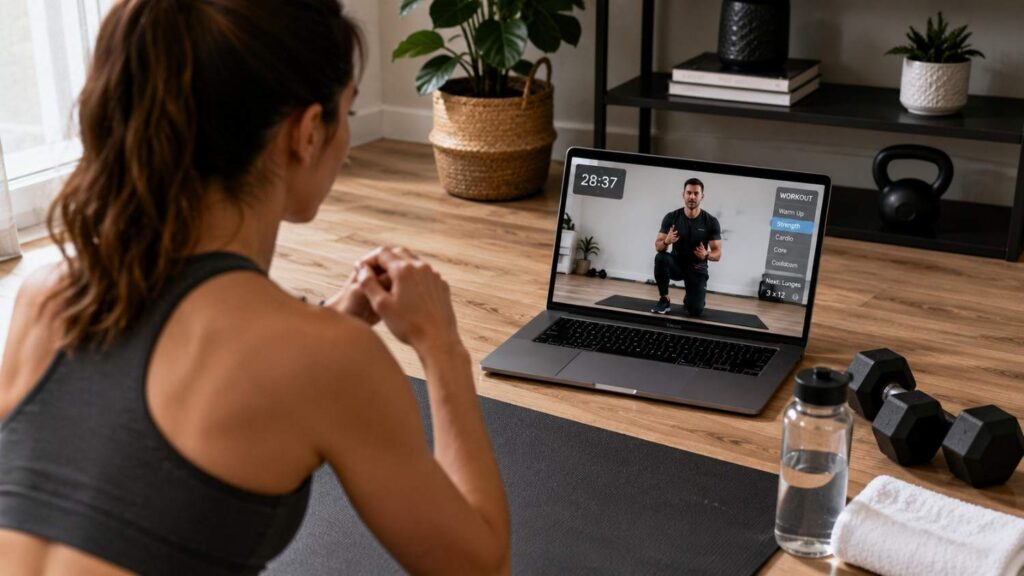
How to Use Virtual Personal Trainers for Better Results
Learning how to use virtual personal trainers for better results involves much more than opening a fitness app and following whatever workout appears on the screen. High-quality virtual coaching is a structured relationship in which a trainer assesses your needs, develops a suitable program, reviews your performance, answers questions, and makes adjustments based on your progress. Your responsibility is to follow the plan consistently and provide enough accurate feedback for the trainer to make good decisions.
Virtual personal training can include live video sessions, recorded exercise reviews, customized workouts, app-based tracking, messaging, scheduled check-ins, or a combination of these methods. The flexibility is one of its biggest advantages. You may be able to work with a specialist who lives far away, train from home, or follow a professional program while travelling. At the same time, remote coaching requires more independence because your trainer cannot observe every repetition or automatically know what happened during your week.
The best results come from treating online coaching as a complete system rather than a workout subscription. Clear goals, appropriate exercise selection, sensible progression, accountability, recovery, and honest communication all need to work together. The sections below explain exactly how to approach virtual personal training, what to look for in a coach, how to monitor progress, and which mistakes can reduce the value of your program.
What Is Virtual Personal Training and How Does It Work?
Virtual personal training is professional fitness coaching delivered remotely through digital communication rather than requiring the trainer and client to meet in the same physical location for every session. Depending on the service, the coach may provide live video instruction, personalized workouts, recorded exercise demonstrations, messaging support, progress reviews, or a combination of several methods. Some services closely resemble traditional personal training, while others function more like independent coaching with periodic supervision.
A well-designed remote program should still follow the same basic logic as effective in-person coaching. The trainer needs to understand your goals, current fitness level, training history, available equipment, schedule, and relevant limitations. From there, the coach can create an exercise program and decide how progress will be monitored. The distance between trainer and client changes the delivery method, but it should not eliminate personalization, progression, or meaningful feedback.
The quality of online personal training therefore depends heavily on how the service is structured. A program that simply distributes generic workouts is different from genuine coaching. Professional remote training should include some method of reviewing performance and changing the plan when necessary. Understanding the different delivery models helps you choose the level of supervision that matches your experience, confidence, goals, and need for accountability.
Live Virtual Training
Live virtual training uses real-time video communication so the trainer and client can interact during the workout. The trainer may demonstrate exercises, observe repetitions, provide verbal cues, adjust difficulty, answer questions, and help manage the pace of the session. For clients who prefer scheduled appointments, this approach can provide a strong sense of structure and fitness accountability similar to meeting a trainer at a gym.
Live coaching can be especially useful when you are learning new movements or need immediate clarification. If your squat position changes, your coach may be able to notice the problem and suggest an adjustment during the same set. The trainer can also modify exercises when equipment is unavailable or when a movement does not feel appropriate. That responsiveness is one of the main advantages of real-time virtual workout sessions.
However, video coaching has practical limitations. Camera position, lighting, internet quality, room size, and equipment placement can affect what the trainer sees. A single front-facing view may not reveal every technical detail. Good virtual trainers therefore tell clients where to place the camera and may ask for different viewing angles when movement assessment is important.
Asynchronous Online Fitness Coaching
Asynchronous coaching allows you to complete workouts independently without meeting your trainer live for every session. The coach usually delivers a personalized program through an app, spreadsheet, website, or training platform. You record your results after each workout and communicate through messages, scheduled reviews, or submitted exercise videos. This format is popular because it gives clients more freedom over when they train.
The main advantage is flexibility. You can often complete workouts early in the morning, during lunch, after work, or while travelling without coordinating every session with the trainer’s calendar. This can make personal training from home easier to maintain for people with unpredictable schedules. Experienced trainees may also appreciate having professional programming without needing continuous supervision.
The trade-off is that asynchronous coaching requires greater responsibility. Your trainer cannot correct a mistake immediately if you never report it. You need to record your workouts accurately, submit requested videos, and explain when something feels wrong. Clients who communicate poorly may receive less useful adjustments because the trainer has incomplete information. The model works best when both sides maintain a regular feedback routine.
Hybrid Virtual Coaching
Hybrid virtual coaching combines elements of live training and asynchronous support. A client might complete most workouts independently while meeting the trainer through video once a week or several times per month. Between calls, the coach may review logged workouts, answer messages, assess exercise videos, and adjust the program based on performance. This structure can provide both flexibility and regular personal contact.
For many people, hybrid coaching offers a practical balance. Beginners can use live sessions to learn important exercises, then complete familiar workouts independently. More advanced clients can use scheduled calls for technique work, performance reviews, or difficult training sessions while handling routine sessions on their own. The model reduces scheduling pressure without removing human coaching from the process.
When comparing hybrid programs, ask exactly what support is included. Some services advertise regular coaching but provide only occasional messages. Others offer detailed weekly reviews and fast exercise feedback. Understanding how often your program is reviewed, how video feedback works, and when you can speak directly with your coach helps you judge whether the service provides enough support for your needs.
| Virtual Training Format | Delivery Method | Best For | Key Coaching Element | Flexibility Level |
|---|---|---|---|---|
| Live Virtual Training | Real-time video sessions | Beginners and clients needing direct supervision | Live exercise guidance and technique feedback | Medium |
| Asynchronous Online Coaching | App, messaging, recorded videos | Independent trainees with flexible schedules | Personalized workout plans and progress reviews | High |
| Hybrid Virtual Coaching | Live sessions + independent workouts | Clients wanting flexibility with regular coaching | Combination of live feedback and self-guided training | High |
| Remote Personal Training | Digital platforms and remote communication | Home-based or location-independent training | Ongoing coaching and program adjustments | High |
How to Use Virtual Personal Trainers for Better Results Step by Step
The most effective way to use a virtual trainer is to approach the relationship systematically. Results are easier to achieve when both you and your coach understand your starting point, your desired outcome, your weekly availability, and the measures that will be used to evaluate progress. Without those basics, even a technically sound workout program can become difficult to follow or assess.
One thing I always recommend is turning broad fitness goals into specific behaviours and measurable outcomes. “I want to get fitter” gives limited direction. A more useful goal could be completing three strength sessions each week, increasing the number of controlled push-ups you can perform, improving a particular lift, or building enough endurance to complete a planned event. Clear targets help the trainer choose appropriate exercises and training volume.
After the plan begins, treat each workout as information as well as exercise. Your performance tells the coach whether the program is too easy, too difficult, progressing appropriately, or being affected by recovery and lifestyle factors. The steps below explain how to establish your starting point, organize training around your schedule, and communicate in a way that helps your trainer make useful decisions.
Step 1 — Establish Your Starting Point
Your trainer needs an accurate picture of where you are now before deciding where your program should go. Share your training history, current activity level, previous experience with resistance or cardiovascular exercise, available equipment, normal schedule, and any limitations that may affect training. Avoid exaggerating your fitness level or minimizing difficulties because inaccurate information can lead to an inappropriate program.
Health and injury history also matters. Tell your trainer about relevant injuries, ongoing pain, medical restrictions, or previous exercise-related problems. Appropriate pre-participation screening may be useful before significantly increasing activity. The Physical Activity Readiness Questionnaire, commonly known as PAR-Q+, is one example of a screening approach used to identify circumstances in which additional medical guidance may be appropriate.
Your starting assessment may also include simple performance measures. Depending on your goal, this could involve movement observations, strength tests, endurance benchmarks, mobility checks, or records of current training loads. These measurements create a baseline for future comparison. They are not meant to judge you. Their purpose is to help the trainer design a realistic starting program and measure meaningful change over time.
Related Articles
Step 2 — Create a Realistic Weekly Training Plan
A training program only works when it fits into your real schedule. If you can consistently train three times per week, a well-designed three-day program is usually more useful than a six-day plan you repeatedly miss. Discuss work commitments, family responsibilities, travel, sleep patterns, and any days when training is difficult. A professional trainer should build around these realities rather than ignore them.
Schedule your workouts as deliberately as you would schedule other important appointments. If possible, choose predictable training windows and reduce avoidable interruptions. Preparing equipment, clothing, water, and your training space beforehand can make home sessions easier to start. Small practical steps matter because consistency often depends on reducing friction rather than relying on motivation every day.
Your weekly plan should also include recovery. More training is not automatically better. Strength, conditioning, and higher-intensity sessions create fatigue that your body needs time to manage. Your online personal trainer should consider the relationship between workload and recovery rather than continuously adding sessions. A sustainable schedule helps you train consistently enough to make progress without turning every week into a test of willpower.
Step 3 — Give Your Trainer Useful Feedback
Useful feedback gives your trainer information they cannot collect automatically from a remote location. After each workout, record whether you completed the planned exercises, what resistance you used, how many repetitions you performed, and where the session felt easier or harder than expected. If your program uses perceived effort or another rating system, apply it as consistently as possible.
Feedback should also describe problems rather than simply saying a workout was “bad.” Explain whether the difficulty came from muscle fatigue, poor technique, limited equipment, lack of time, unusual soreness, or confusion about the exercise. If a movement feels uncomfortable, describe where you feel the problem and when it occurs. Your trainer can then decide whether a technique review, exercise modification, or professional medical referral is appropriate.
Honesty is especially important when you miss sessions. Do not enter workouts you did not complete or pretend everything is going well. A good coach can adapt a program to changing circumstances, but only if they know what is happening. Accurate feedback turns virtual coaching into a responsive system instead of forcing the trainer to make decisions based on incomplete information.
How to Choose a Virtual Personal Trainer
Choosing a virtual trainer should involve more than comparing social-media profiles or looking for the person with the most dramatic transformation photos. A professional coaching relationship affects your training decisions, workload, technique, and sometimes your confidence around exercise. It is worth checking whether the trainer has appropriate qualifications, relevant experience, clear communication standards, and a structured process for reviewing progress.
Spending time on choosing a certified trainer who understands your goals can make virtual coaching safer, more personalized, and easier to sustain.
Start by thinking about your own needs. A beginner learning foundational strength exercises may need more live instruction than an experienced lifter who mainly wants programming and accountability. Someone preparing for a marathon needs a different skill set from someone focused on general strength, mobility, or returning to regular exercise. A trainer can be highly competent and still be the wrong match for your specific goal.
You should also understand exactly what the service includes before paying. Ask how often the program is updated, what happens if you miss training, how technique videos are reviewed, whether live sessions are available, and how long you normally wait for a response. Clear expectations reduce frustration and help you compare different online fitness coaching services on substance rather than marketing language.
Check Qualifications and Relevant Experience
A recognized personal-training certification is a useful starting point because it shows that the trainer has completed a defined professional assessment. Organizations such as ACE and NSCA offer personal-trainer credentials associated with established certification standards. Where possible, verify a trainer’s credential instead of assuming that the letters listed in a social profile automatically confirm current professional status.
Credentials do not tell you everything, however. Relevant coaching experience matters because different goals require different skills. Ask whether the trainer regularly works with people at your level and with objectives similar to yours. A coach who specializes in competitive bodybuilding may not automatically be the best choice for an older adult who wants better everyday strength, balance, and confidence.
You should also pay attention to professional boundaries. A qualified personal trainer should understand when a question falls outside normal fitness coaching. Trainers may provide exercise education and general fitness guidance within their professional scope, but medical diagnosis, injury treatment, and individualized clinical nutrition may require other qualified professionals. A coach who confidently claims expertise in every health problem deserves closer scrutiny.
Ask How Personalization Actually Works
Many services use the word “personalized,” but the level of personalization can vary dramatically. Ask how the trainer decides which exercises, training frequency, volume, and progression method to use. A strong answer should include discussion of your goals, experience, schedule, equipment, recovery, and performance rather than simply saying that every client receives a custom plan.
Find out how often the program changes and what triggers an adjustment. Your personalized workout plan should respond to evidence. If you consistently exceed the prescribed repetitions, struggle with recovery, develop an equipment limitation, or change your training schedule, the coach should have a process for modifying the plan. Personalization should continue after the first week rather than ending once the initial program is delivered.
You can also ask what happens during common disruptions. What if you travel for two weeks? What if your gym closes temporarily? What if you miss several sessions because of work? A professional online fitness coach should be able to explain how the program would be adapted. The answer tells you whether the service is genuinely flexible or built around a rigid template.
Understand Communication and Form Feedback
Communication standards can make the difference between useful coaching and a frustrating experience. Ask whether support happens through email, messaging, an app, scheduled video calls, or another system. Find out how often check-ins occur and how quickly the trainer normally responds. You should know what level of contact you are purchasing before the program begins.
Technique feedback deserves specific attention. If your training includes movements that require careful execution, ask how exercise form feedback is handled remotely. Some trainers review recorded videos, while others use live calls for important exercises. A good coach may request specific camera angles so they can see relevant joint positions and movement patterns more clearly.
A clear camera setup also makes it easier for a trainer to see your full range of movement and provide useful technique feedback during remote sessions.
Keep the limitations of video assessment in mind. Even an experienced trainer cannot evaluate what the camera does not capture. Lighting, clothing, frame rate, angle, and blocked views can hide important details. Remote feedback can still be highly useful, but it works best when both trainer and client treat video setup as part of the coaching process rather than as an afterthought.
How to Track Progress With an Online Personal Trainer
Progress tracking gives both you and your trainer evidence about whether the program is moving in the right direction. Without consistent records, it becomes difficult to distinguish genuine improvement from memory, mood, or isolated good and bad workouts. The measurements you choose should match your actual goal rather than relying automatically on body weight or appearance.
For strength-focused training, useful data may include resistance, repetitions, sets, exercise difficulty, and movement quality. Endurance clients might track distance, pace, time, or another relevant performance measure. Someone focused on consistency may simply need to compare planned sessions with completed sessions. A mobility-focused client may pay more attention to comfortable range of motion and movement control.
Good workout progress tracking should remain simple enough to maintain. Recording dozens of numbers that nobody reviews adds work without necessarily improving decisions. Your trainer should identify which measures genuinely influence programming and then review them at sensible intervals. The goal is not to collect data for its own sake. The goal is to create a clear feedback loop that supports better training decisions.
| Goal | Useful Progress Metrics | Typical Review Approach |
|---|---|---|
| Build strength | Load, repetitions, sets, technique | Review weekly trends |
| Build muscle | Training volume, repetitions, load progression | Review weekly |
| Improve endurance | Distance, pace, duration | Review weekly or by training block |
| Improve consistency | Completed sessions vs. planned sessions | Review weekly |
| Improve mobility | Comfortable range and movement quality | Review every few weeks |
| General fitness | Strength, endurance, adherence, daily function | Review every 2–4 weeks |
Track Performance, Not Just Attendance
Showing up matters, but attendance alone does not reveal whether your fitness is improving. If you complete every workout but never record weights, repetitions, duration, or difficulty, your trainer has limited information for deciding when to progress the program. Performance data adds context to consistency and makes long-term improvement easier to evaluate.
Use measurements that connect directly to your goal. A strength trainee might track the load used for a squat variation and the number of good repetitions completed. A beginner building general fitness might monitor how many sessions they complete each week and whether certain exercises feel more controlled. An endurance client may compare pace or duration across similar sessions.
Avoid overreacting to individual workouts. Sleep, stress, illness, nutrition, temperature, and other factors can temporarily affect performance. One weak session does not automatically mean the program is failing. Your trainer should look for trends across several workouts. When the broader pattern shows improvement, stagnation, or excessive fatigue, the data becomes much more useful for adjusting the next training block.
| Training Goal | Primary Metrics | What the Trainer Can Evaluate | Review Focus |
|---|---|---|---|
| Strength Development | Load, repetitions, sets | Strength progression and exercise performance | Progressive overload |
| Muscle Development | Training volume, repetitions, resistance | Workload and consistency | Training progression |
| Endurance | Distance, pace, duration | Cardiovascular performance | Stamina and workload |
| Workout Consistency | Planned vs. completed sessions | Exercise adherence | Training consistency |
| Mobility | Range of motion, movement quality | Movement control and flexibility | Technique and mobility |
| General Fitness | Strength, endurance, adherence, daily function | Overall fitness progress | Long-term development |
Use Progressive Training Rather Than Constant Change
Effective training usually requires some degree of repeated exposure to key movements. If every workout contains completely different exercises, it becomes difficult to compare performance or develop technical skill. Repeating important movements gives you and your trainer reference points that reveal whether strength, control, endurance, or capacity is improving.
Progression does not always mean adding more weight. Depending on the exercise and goal, your coach may increase repetitions, sets, range of motion, movement complexity, time under tension, distance, or total workload. The broader concept is often described as progressive overload, meaning the training challenge gradually develops as your capacity improves.
Progression should still be appropriate. Increasing difficulty too quickly can reduce technique quality or create unnecessary fatigue, while never increasing the challenge may eventually limit progress. A good virtual fitness coach looks at your completed sessions, recovery, and movement quality before deciding what to change. The purpose is steady development, not making every workout harder simply for the sake of difficulty.
Review the Program Regularly
A regular review creates space to evaluate more than individual workout numbers. Set a predictable time to discuss what is improving, which exercises feel effective, where progress has slowed, and whether your goals or schedule have changed. Depending on the program, this may happen weekly, every few weeks, or at the end of each training block.
Use the review to examine adherence as well as performance. If you completed only half the planned workouts, the answer may not be adding more exercises. The better solution could involve reducing session length, changing training days, simplifying the program, or addressing practical barriers. Program design should respond to what you can consistently execute.
Regular reviews also prevent training from continuing on autopilot. Your virtual fitness coach should be able to explain why the current program still makes sense or why a change is needed. Exercise variation can be useful, but it should serve a purpose. Good coaching updates the plan based on evidence rather than replacing exercises simply to make the program appear new.
Common Mistakes That Reduce Virtual Training Results
Virtual coaching gives you flexibility, but that flexibility also creates opportunities for inconsistency. Without a trainer physically present, it is easier to postpone workouts, skip difficult exercises, forget to record results, or avoid discussing problems. These habits can gradually reduce the effectiveness of an otherwise well-designed program.
Another common mistake is treating the service as a one-way product. Remote personal training works best when information moves in both directions. Your trainer provides programming and guidance, while you provide performance data, questions, technique videos, and honest feedback. If either side stops communicating, personalization becomes much harder.
Finally, avoid assuming that more training automatically produces faster progress. Randomly adding extra sessions, repeating hard workouts, or ignoring recovery can interfere with the original program. Your coach needs to understand the total amount of training you are doing. The three mistakes below are particularly important because they can prevent your trainer from seeing the full picture and making appropriate adjustments.
Treating the Trainer Like a Workout Library
A workout library gives you exercises. A trainer should give you decisions, context, and feedback. If you simply download each week’s workouts without asking questions or reporting results, you are using only part of the service. The most valuable part of coaching is often the interpretation of what happened after the program was written.
Use the available communication tools. Tell your trainer when an exercise feels unusually difficult, when the prescribed equipment is unavailable, or when you repeatedly fail to complete a particular session. Submit videos when requested and respond to check-in questions with enough detail to be useful. These interactions help the coach understand how the program works in practice.
This distinction becomes especially important when comparing online services. Some products are genuinely self-guided workout libraries and can still be useful. Problems arise when a client expects personalized coaching but receives generic programming with little human review. Before signing up, make sure the service level matches what you actually want and need.
Changing the Program Without Discussing It
Clients often make program changes for understandable reasons. You may dislike an exercise, discover that a machine is unavailable, or feel tempted to add extra training because you have more energy. Small changes are not automatically harmful, but frequent unreported changes can make it difficult for your trainer to understand your actual workload.
For example, adding several intense cardio sessions to a strength program may affect recovery even if those sessions never appear in your training log. Replacing exercises can also change the muscles, movement skills, and progression strategy involved. If your trainer assumes you followed the original plan, later adjustments may be based on incorrect information.
When something needs to change, communicate first whenever practical. A qualified coach can usually provide an alternative that preserves the purpose of the original exercise. If your schedule changes, the trainer may reorganize the week rather than simply removing sessions. This keeps the program coherent while still allowing it to adapt to real-life circumstances.
Ignoring Pain or Warning Signs
Virtual trainers can provide exercise coaching, but remote communication has limits when pain, injury, or medical symptoms are involved. Do not assume that your coach can diagnose the cause of discomfort through a message or short video. Pain that is persistent, severe, unusual, or associated with concerning symptoms may require evaluation from an appropriate healthcare professional.
Be specific when communicating discomfort. Explain when it started, where you feel it, which movements aggravate it, and whether it continues outside training. Your coach may decide to pause or modify an exercise, but responsible trainers should also recognize situations that fall outside their professional scope.
Avoid the idea that pushing through every form of pain shows commitment. Training requires effort, but productive effort is not the same as ignoring warning signs. One of the advantages of professional coaching is having someone help you make sensible decisions about workload. That benefit disappears when important information is hidden or dismissed.
Virtual Personal Training vs. In-Person Training
Virtual and in-person personal training share the same broad purpose: helping a client exercise more effectively through professional programming, coaching, and accountability. The main difference is how that support is delivered. In-person training allows the coach to observe you directly in the same physical environment, while virtual training depends on video, digital tracking, messaging, and independent sessions.
Neither approach is automatically superior for every person. Virtual coaching may provide better flexibility, access to specialists outside your area, and easier scheduling. In-person training may provide closer supervision, immediate physical demonstration, and fewer camera-related limitations. The right choice depends on your experience, goals, confidence, training environment, and need for hands-on support.
It is also possible to use both approaches. Some clients work with an online coach for programming while occasionally booking local in-person sessions for complex technique. Others begin with face-to-face instruction and later move to remote coaching once they feel comfortable training independently. Instead of asking which format is universally better, consider which environment gives you the support necessary to train safely and consistently.
When Virtual Coaching Makes Sense
Virtual coaching is often a strong option for people who can exercise independently but still want professional planning, accountability, and feedback. It may suit clients who train at home, travel regularly, work unusual hours, or live far from trainers who specialize in their particular goal. Geographic flexibility can significantly expand the pool of coaches available to you.
The format can also work well for experienced trainees. If you already know how to perform your main exercises safely, you may not need someone standing beside you for every repetition. Instead, you might benefit more from structured programming, periodic video review, and regular discussions about progression, recovery, and performance.
Beginners can also succeed with virtual coaching when the service provides enough instruction. Live sessions, detailed demonstrations, and frequent form videos may make the transition easier. The key question is not whether you are a beginner or advanced athlete. It is whether the amount of supervision offered matches your current ability to understand instructions and perform the program independently.
When In-Person Supervision May Be Better
In-person coaching may be the better starting point when you need close observation while learning unfamiliar movements. A trainer standing nearby can view your movement from several angles, reposition themselves quickly, demonstrate equipment directly, and respond without the limitations created by camera placement or internet connection.
Face-to-face training may also be more appropriate when a client struggles to exercise independently. Some people benefit strongly from physically travelling to a training location and having another person present throughout the session. The environment itself can reduce distractions and create a stronger boundary between training time and everyday responsibilities.
Certain situations also require professionals beyond the normal scope of personal training. Someone recovering from surgery, managing significant pain, or dealing with complex medical limitations may need guidance from a physician, physical therapist, or other qualified clinician before or alongside fitness coaching. Virtual training should never be used as a substitute for professional medical care when medical assessment is appropriate.
Quick Answer About How to Use Virtual Personal Trainers for Better Results
Virtual personal training produces the most value when you use your trainer as an ongoing coach rather than as someone who simply sends you workouts. The process should begin with a realistic assessment of your current fitness level, training history, available equipment, weekly schedule, limitations, and goals. That information gives the trainer enough context to build a program that fits your life instead of forcing you into an unrealistic routine.
To understand how to use virtual personal trainers for better results, focus on consistent communication. Report completed workouts, difficulties, recovery, pain, missed sessions, equipment limitations, and changes in performance. When technique matters, send videos from the angles your trainer requests or schedule live sessions so movement can be reviewed more effectively. Good remote coaching depends heavily on the quality of the feedback exchanged between the client and trainer.
Finally, measure progress using indicators that match your goal. Strength clients may track resistance and repetitions, while endurance clients may monitor pace, distance, or duration. Review those trends regularly with your coach and allow the program to change as your ability improves. Virtual coaching works best when programming, feedback, progression, and accountability operate as one connected system rather than as separate features.
What Matters Most
The most important factor in virtual personal training is not the video platform, workout app, or messaging system. What matters most is whether the coaching process creates a clear link between your goals, the workouts you perform, the feedback you provide, and the changes your trainer makes. Technology makes remote coaching possible, but thoughtful programming and consistent execution are what drive progress.
Personalization also matters more than variety. A professional trainer should understand your starting ability, schedule, recovery capacity, equipment, and movement limitations before assigning exercises. Your program should gradually evolve as your performance changes. Constantly receiving new workouts may feel exciting, but frequent exercise changes can make it harder to measure whether you are actually becoming stronger, fitter, or more skilled.
Communication completes the process. Your coach cannot physically stand next to you during every session, so accurate feedback becomes especially important. Tell your trainer when an exercise feels too easy, unusually difficult, uncomfortable, or impractical. When both sides communicate clearly, virtual fitness coaching becomes an ongoing decision-making process instead of a static list of exercises.
Best Way to Start
The best way to start is with a detailed conversation before committing to a demanding training plan. Explain what you want to achieve and why it matters to you. A goal such as “be healthier” is meaningful but difficult to program around, while “complete three strength sessions each week and improve my main lifts over twelve weeks” provides clearer direction for both you and the trainer.
Next, describe the practical details that will shape your training. Share your normal weekly schedule, training environment, equipment, experience level, previous injuries, and any movements that currently cause problems. If you train at home, show your coach the space and equipment available. That helps prevent programs filled with exercises you cannot realistically perform.
Finally, agree on the coaching process before the first training block begins. Ask how often the trainer reviews results, how quickly program adjustments are made, how technique videos should be submitted, and what communication channel you should use. Knowing these details from the beginning removes uncertainty and helps you use the service consistently.
Frequently Asked Questions About How to Use Virtual Personal Trainers for Better Results
People considering online coaching often have similar concerns: whether it genuinely works, whether form can be assessed remotely, how frequently they need to communicate, and whether beginners receive enough support. These questions are important because the quality of virtual training depends heavily on the service model and the behaviour of both the trainer and client.
There is no single format that works for everyone. Some clients need weekly live sessions and frequent messages. Others perform well with a written program and a structured monthly review. Your experience level, goals, confidence, schedule, and need for accountability should influence the type of support you choose.
The answers below provide practical guidance rather than universal promises. Virtual coaching can be effective, but it is not magic. Training outcomes still depend on appropriate programming, consistency, recovery, communication, and individual response. A good coach can improve the process, but neither online nor in-person personal training can guarantee a specific result within a fixed timeline.
Does virtual personal training really work?
Virtual personal training can work when the program is appropriately designed and the client follows it consistently. Research on tele-exercise and remotely supervised exercise has reported improvements in several physical and functional outcomes across studied populations, although results differ depending on the participants, type of exercise, level of supervision, and length of the program.
The delivery method is only part of the equation. A poorly designed workout does not become effective simply because a trainer sends it through an app. Successful virtual coaching still requires appropriate exercise selection, progression, feedback, and adherence. The trainer needs enough information to modify the plan when your ability or circumstances change.
Your own behaviour also matters. Complete the workouts, record performance honestly, communicate difficulties, and use technique reviews when needed. If you treat remote coaching as an active relationship rather than a passive subscription, the trainer has much more information to work with. That usually creates a better environment for meaningful progress.
Is an online personal trainer good for beginners?
An online personal trainer can be suitable for beginners when the coaching format provides enough instruction and feedback. Someone completely new to exercise may benefit from live video sessions at first so the trainer can demonstrate movements, explain terminology, and watch important exercises in real time. Recorded form reviews can provide additional support between sessions.
Beginners should also look for trainers who explain the reason behind the program rather than simply assigning exercises. Understanding basic concepts such as sets, repetitions, rest periods, effort, and progression makes independent training easier. A patient coach should expect questions and should not make a new client feel uncomfortable for asking for clarification.
However, some beginners may prefer in-person supervision, especially when they lack confidence using gym equipment or have significant physical limitations. The best format is the one that provides enough support for you to exercise confidently and consistently. Virtual training is an option, not a requirement, and choosing more supervision when needed is completely reasonable.
How often should I communicate with my virtual trainer?
There is no universal communication schedule because different coaching models serve different clients. Some programs include a live call every week, while others use ongoing messaging and a more detailed review every few weeks. The important point is that communication should happen frequently enough to prevent small problems from continuing unnoticed.
Your trainer should receive updates about adherence, exercise difficulty, recovery, discomfort, schedule changes, and performance. If you are learning new movements, communication may need to be more frequent. Experienced trainees following familiar exercises may require less day-to-day contact but still benefit from structured reviews.
Before joining a program, ask what communication is included and what response time you should expect. Do not assume that “online coaching” means unlimited access to the trainer. Clear expectations protect both sides. Once the schedule is established, use it consistently so your coach receives enough information to make timely adjustments.
Can a virtual trainer correct my exercise form?
Yes, a virtual trainer can often provide useful technique feedback through live video or recorded clips. The trainer may observe your position, movement speed, control, range of motion, and other visible details, then provide cues or suggest modifications. Video can be particularly useful when the exercise is recorded from a consistent angle over time.
However, remote form assessment has limitations. A camera captures only what appears in the frame, and poor lighting or an inappropriate angle can hide important details. Ask your trainer whether they want a side view, front view, or another position for each movement. Following those instructions improves the usefulness of the review.
Video feedback should also remain within the trainer’s professional scope. A coach can discuss exercise technique and make training adjustments, but persistent pain or suspected injuries may require assessment by an appropriate healthcare professional. Good virtual coaching includes knowing when a technique issue is a coaching problem and when it may require further evaluation.
Is an online trainer better than a fitness app?
An online trainer and a fitness app are not necessarily direct substitutes. Many apps provide useful exercise demonstrations, tracking features, or structured programs, but the experience may remain largely self-guided. A professional trainer adds human interpretation by reviewing your performance, answering questions, and changing the program based on your feedback.
Some virtual trainers also use fitness apps as their main delivery system. In that case, the app is simply the technology through which the coaching happens. The real question is whether a qualified person actively monitors your progress and makes individualized decisions rather than whether an app appears on your phone.
A self-guided app may be enough for someone who wants basic structure and already understands how to train independently. A trainer may be more valuable when you need personalized programming, accountability, technique feedback, or help adjusting training around changing circumstances. Choose based on the level of support you actually need.
How long does it take to see results from virtual personal training?
There is no responsible universal timeline because different goals progress at different rates. Strength, endurance, body composition, mobility, technical skill, and general fitness do not change according to the same schedule. Your starting point, training frequency, program quality, recovery, nutrition where relevant, and individual response also influence how quickly measurable changes appear.
Instead of focusing only on a transformation deadline, track smaller indicators of progress. You may notice better exercise control, increased repetitions, heavier training loads, improved workout consistency, greater endurance, or easier recovery before major visible changes occur. These signs can show that the program is working even when the final goal remains some distance away.
Be cautious with coaches who promise a guaranteed result within a fixed number of days. Professional training involves managing variables, not predicting the future with certainty. A better question is whether your performance trends are moving in the right direction and whether your trainer can explain how the current plan supports your longer-term objective.
Conclusion
Virtual personal training can provide professional guidance without requiring you to meet your trainer in the same gym for every workout. Its main advantages are flexibility, access, personalization, and the ability to combine independent training with structured coaching. Those advantages are most valuable when the client actively participates in the process rather than treating the service as a collection of workouts.
Understanding how to use virtual personal trainers for better results means building a strong feedback loop. Your trainer needs accurate information about your goals, performance, schedule, recovery, and limitations. In return, you should receive programming that changes appropriately as you improve. Progress tracking, regular communication, technique feedback, and sensible progression help keep that relationship productive.
The best virtual coaching relationship should make your training clearer, not more confusing. You should understand what you are working toward, why the main exercises are included, how progress will be measured, and what to do when circumstances change. When those pieces are in place, remote coaching can become a practical long-term system for improving fitness rather than another short-lived workout plan.
The Main Takeaway
The central lesson is that virtual training works best when you use the trainer as a coach, not simply as a source of exercises. Complete the program consistently, record meaningful performance data, and communicate when something changes. The more accurate information your trainer receives, the more effectively they can personalize future decisions.
Focus on the basics before chasing advanced techniques. A clear goal, manageable training schedule, appropriate exercises, progressive challenge, adequate recovery, and regular review will usually matter more than having the newest app or the most complicated workout. Technology should make these fundamentals easier to manage rather than distract from them.
If you remember one principle from this guide, make it this: good remote coaching depends on a strong feedback loop. Your training creates information, your coach interprets that information, and the next stage of your program reflects what was learned. That repeated process is what turns virtual personal training into individualized coaching.
Your Next Step
Before hiring a trainer, write down your main goal, realistic weekly availability, equipment, training history, and any limitations that may influence your program. This short preparation will make initial consultations more useful and help you explain exactly what type of support you need.
Then compare trainers by qualifications, relevant experience, coaching process, communication frequency, progress tracking, and program-adjustment policies. Avoid making the decision entirely on price, social-media popularity, or visual branding. A trainer who communicates clearly and understands your goal may provide more value than a larger service that offers less individual attention.
Once you choose a coach, give the process enough consistency to evaluate it properly. Complete the agreed training, provide accurate feedback, and review your progress using meaningful measures. If your circumstances change, communicate early rather than quietly abandoning the plan.