
Fitness technology has evolved dramatically over the past decade, and in 2026, fitness wearables have become smarter, more accurate, and more essential than ever before. From smartwatches and fitness bands to advanced health-tracking rings and AI-powered wellness devices, wearable technology is transforming how people monitor their health, fitness, recovery, sleep, and overall lifestyle.
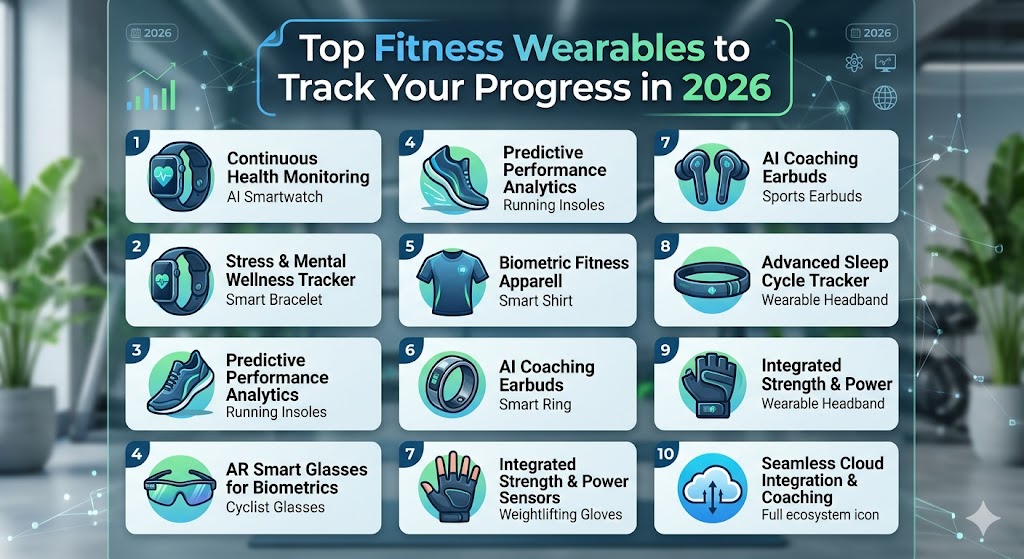
Modern fitness wearables do much more than count steps. Today’s devices can track heart rate, blood oxygen levels, stress, sleep quality, calories burned, workout intensity, hydration, recovery scores, and even advanced metrics like ECG monitoring and body temperature analysis. Artificial intelligence and machine learning are also improving personalized health insights, helping users make better decisions about exercise, nutrition, recovery, and wellness.
Whether you are a professional athlete, fitness enthusiast, beginner, or someone simply trying to maintain a healthier lifestyle, choosing the right fitness wearable can significantly improve your ability to track progress and stay motivated.
This comprehensive guide explores the top fitness wearables to track your progress in 2026, including their features, benefits, innovations, and how they are shaping the future of personal health technology.
The Growing Importance of Fitness Wearables
Why Fitness Wearables Are Popular
Fitness wearables have become mainstream because they provide real-time health data and personalized insights.
People use wearables to:
- Track workouts
- Monitor heart health
- Improve sleep
- Measure activity levels
- Set fitness goals
- Stay motivated
- Manage stress
- Improve recovery
The increasing focus on health and wellness has fueled massive growth in wearable technology.
How Wearables Improve Fitness
Fitness wearables help users:
- Understand body performance
- Identify health trends
- Improve workout consistency
- Track progress over time
- Prevent overtraining
- Build healthier habits
Real-time feedback helps users make informed lifestyle decisions.
Key Features to Look for in Fitness Wearables
Before choosing a wearable device, it is important to understand the most valuable features available in 2026.
Heart Rate Monitoring
Modern sensors provide continuous heart rate tracking during rest and exercise.
Sleep Tracking
Wearables analyze sleep stages, quality, and recovery patterns.
GPS Tracking
Built-in GPS improves running, cycling, and outdoor workout tracking.
Blood Oxygen Monitoring
SpO2 sensors monitor oxygen saturation levels.
Stress and Recovery Tracking
AI-powered analytics help users manage stress and optimize recovery.
Water Resistance
Important for swimmers and outdoor athletes.
Battery Life
Long battery life improves convenience and usability.
Smartphone Integration
Most wearables sync with mobile apps for deeper insights.
Choosing the right features depends on fitness goals and lifestyle needs.
1. Apple Watch Series 12
Overview
The Apple Watch Series 12 remains one of the most advanced fitness wearables in 2026. It combines fitness tracking, health monitoring, communication, and productivity features into a powerful smartwatch ecosystem.
Key Features
- Advanced heart rate tracking
- ECG monitoring
- Blood oxygen measurement
- AI-powered coaching
- Sleep tracking
- Workout detection
- Temperature sensing
- Fall detection
Fitness Benefits
The Apple Watch helps users:
- Track workouts accurately
- Monitor cardiovascular health
- Improve recovery
- Stay active through reminders
Why It Stands Out
Its seamless integration with the Apple ecosystem makes it highly popular among iPhone users.
Official Resource:
2. Samsung Galaxy Watch 7
Overview
Samsung continues to lead the Android wearable market with the Galaxy Watch 7.
Key Features
- Advanced body composition analysis
- Sleep coaching
- AI-powered wellness insights
- Stress tracking
- ECG and blood pressure monitoring
- GPS fitness tracking
Best For
- Android users
- Fitness enthusiasts
- Smart lifestyle integration
Advantages
Samsung’s wearable ecosystem integrates smoothly with Galaxy smartphones and smart home systems.
Official Resource:
3. Garmin Forerunner 975
Overview
Garmin remains one of the top brands for athletes and fitness professionals.
The Forerunner 975 focuses heavily on performance analytics and endurance training.
Key Features
- Advanced GPS tracking
- VO2 max analysis
- Recovery tracking
- Training readiness scores
- Multi-sport support
- Long battery life
Best For
- Runners
- Cyclists
- Triathletes
- Outdoor athletes
Advantages
Garmin devices provide detailed fitness analytics that appeal to serious athletes.
Official Resource:
4. Fitbit Charge 7
Overview
Fitbit continues to dominate the fitness band category in 2026.
The Fitbit Charge 7 combines affordability with powerful health tracking features.
Key Features
- Heart rate monitoring
- Sleep analysis
- Daily readiness scores
- Stress management tools
- Activity tracking
- Guided breathing exercises
Best For
- Beginners
- Everyday fitness tracking
- Wellness-focused users
Advantages
Fitbit’s user-friendly interface makes health tracking accessible for all experience levels.
Official Resource:
5. Oura Ring Gen 5
Overview
Smart rings are becoming increasingly popular in 2026, and the Oura Ring Gen 5 is one of the leaders in this category.
Key Features
- Sleep tracking
- Recovery monitoring
- Heart rate analysis
- Stress detection
- Temperature monitoring
- Readiness scoring
Why Smart Rings Are Growing
Smart rings provide discreet and comfortable health monitoring.
Best For
- Sleep tracking
- Recovery optimization
- Minimalist wearable users
Advantages
The Oura Ring offers highly detailed recovery and sleep insights in a compact design.
Official Resource:
6. Whoop 5.0
Overview
Whoop focuses heavily on recovery, strain, and performance optimization.
It is widely used by athletes and fitness professionals.
Key Features
- Recovery scores
- Sleep coaching
- Strain monitoring
- Continuous heart rate tracking
- Personalized recommendations
Best For
- Professional athletes
- High-performance training
- Recovery-focused fitness
Advantages
Whoop provides detailed recovery analytics that help prevent overtraining.
Official Resource:
7. Polar Vantage V4
Overview
Polar continues to innovate in sports science and training analytics.
Key Features
- Running power metrics
- Heart rate precision
- Recovery tracking
- Sleep analysis
- Fitness tests
Best For
- Serious fitness enthusiasts
- Endurance athletes
- Performance optimization
Advantages
Polar devices are known for highly accurate heart rate monitoring.
8. Huawei Watch GT 6
Overview
Huawei’s wearable lineup continues expanding globally with strong battery life and health features.
Key Features
- Long battery performance
- Heart rate monitoring
- Sleep tracking
- GPS fitness tracking
- Stress analysis
Best For
- Battery-conscious users
- Everyday fitness tracking
Advantages
Huawei smartwatches combine elegant design with powerful fitness capabilities.
9. Amazfit Balance
Overview
Amazfit continues offering affordable fitness wearables with impressive feature sets.
Key Features
- AI fitness coaching
- Sleep tracking
- GPS support
- Stress monitoring
- Activity tracking
Best For
- Budget-conscious buyers
- Everyday users
Advantages
Amazfit devices offer excellent value for money.
10. Google Pixel Watch 3
Overview
Google continues improving wearable technology with AI-powered insights and Fitbit integration.
Key Features
- Google Assistant integration
- Health tracking
- Fitbit-powered analytics
- Smart notifications
- GPS and workout tracking
Best For
- Android users
- Google ecosystem users
Advantages
The Pixel Watch combines smartwatch productivity with advanced health tracking.
How AI Is Improving Fitness Wearables
Personalized Coaching
AI analyzes fitness data to provide customized workout suggestions.
Predictive Health Insights
Wearables can identify patterns and potential health risks.
Smarter Recovery Tracking
AI helps users balance exercise and recovery more effectively.
Adaptive Fitness Recommendations
Workout intensity adjusts based on performance and recovery.
AI is making fitness wearables more intelligent and personalized.
Benefits of Using Fitness Wearables
Better Health Awareness
Users gain deeper insights into their physical condition.
Increased Motivation
Tracking progress encourages consistency.
Improved Workout Efficiency
Detailed metrics help optimize training.
Enhanced Recovery
Recovery monitoring reduces injury risks.
Lifestyle Improvements
Users often improve sleep, nutrition, and daily activity habits.
Fitness wearables support long-term wellness goals.
Challenges of Fitness Wearables
Privacy Concerns
Health data security remains important.
Accuracy Limitations
Some metrics may vary in precision.
Battery Dependency
Frequent charging can be inconvenient.
Cost
Premium wearables can be expensive.
Despite these challenges, wearable technology continues improving rapidly.
Future Trends in Fitness Wearables
Non-Invasive Glucose Monitoring
Future wearables may track blood glucose without needles.
Advanced AI Coaching
AI trainers will become more personalized.
Mental Wellness Tracking
Devices may improve emotional and stress analysis.
Deeper Medical Integration
Wearables may increasingly support healthcare systems.
Flexible and Smart Fabrics
Wearable technology may expand into clothing and textiles.
The future of wearable fitness technology looks highly innovative.
How to Choose the Right Fitness Wearable
Identify Your Goals
Choose a device based on:
- Weight loss
- Athletic training
- Sleep improvement
- Health monitoring
- General wellness
Consider Compatibility
Ensure compatibility with your smartphone ecosystem.
Evaluate Battery Life
Longer battery performance improves convenience.
Compare Features
Focus on features most relevant to your needs.
Set a Budget
Wearables range from affordable fitness bands to premium smartwatches.
Selecting the right wearable depends on lifestyle, goals, and preferences.
Role of Wearables in Preventive Healthcare
Early Detection
Wearables may identify abnormal health patterns early.
Continuous Monitoring
Real-time tracking supports proactive health management.
Remote Healthcare Integration
Doctors increasingly use wearable data for monitoring patients.
Health Awareness
Users become more aware of their physical and mental well-being.
Wearables are becoming important tools in modern healthcare ecosystems.
Fitness Wearables and Smart Ecosystems
Connected Health Devices
Wearables increasingly connect with:
- Smartphones
- Smart home systems
- Fitness equipment
- Healthcare apps
Benefits
- Centralized health tracking
- Better automation
- Improved convenience
Connected ecosystems improve overall digital wellness experiences.
FAQs About Fitness Wearables in 2026
What are fitness wearables?
Fitness wearables are electronic devices that track health, fitness, and wellness data such as activity levels, heart rate, sleep, and workouts.
Which fitness wearable is best for athletes?
Garmin and Whoop devices are highly popular among athletes due to advanced performance and recovery tracking.
Are smart rings better than smartwatches?
Smart rings are more compact and comfortable for sleep and recovery tracking, while smartwatches provide broader functionality and displays.
Can fitness wearables improve health?
Yes. Wearables help users monitor activity, sleep, stress, and heart health, encouraging healthier habits.
Are fitness trackers accurate?
Modern wearables are increasingly accurate, though some metrics may vary slightly depending on the device and usage.
Which wearable has the best battery life?
Garmin and Huawei devices are known for excellent battery performance.
Can wearables track sleep quality?
Yes. Most modern wearables analyze sleep stages, duration, and recovery patterns.
Are fitness wearables waterproof?
Many devices offer water resistance suitable for swimming and workouts, though specifications vary by model.
Do fitness wearables work without smartphones?
Most wearables can track activity independently, but smartphone apps enhance data analysis and features.
What is the future of wearable technology?
Future wearables will likely include advanced AI coaching, medical monitoring, non-invasive sensors, and deeper healthcare integration.
Conclusion
Fitness wearables have become powerful tools for tracking health, improving fitness performance, enhancing recovery, and supporting overall wellness. In 2026, wearable technology is smarter, more personalized, and more advanced than ever before, offering users detailed insights into nearly every aspect of their physical condition and daily habits.
From premium smartwatches like the Apple Watch and Samsung Galaxy Watch to specialized fitness trackers such as Garmin, Whoop, Fitbit, and Oura Ring, there are wearable solutions available for every type of user and fitness goal.
As artificial intelligence, biometric sensors, and health analytics continue evolving, fitness wearables will play an even greater role in preventive healthcare, athletic performance, and personalized wellness management. People who embrace wearable technology can better understand their bodies, improve their habits, and achieve long-term health and fitness success.