
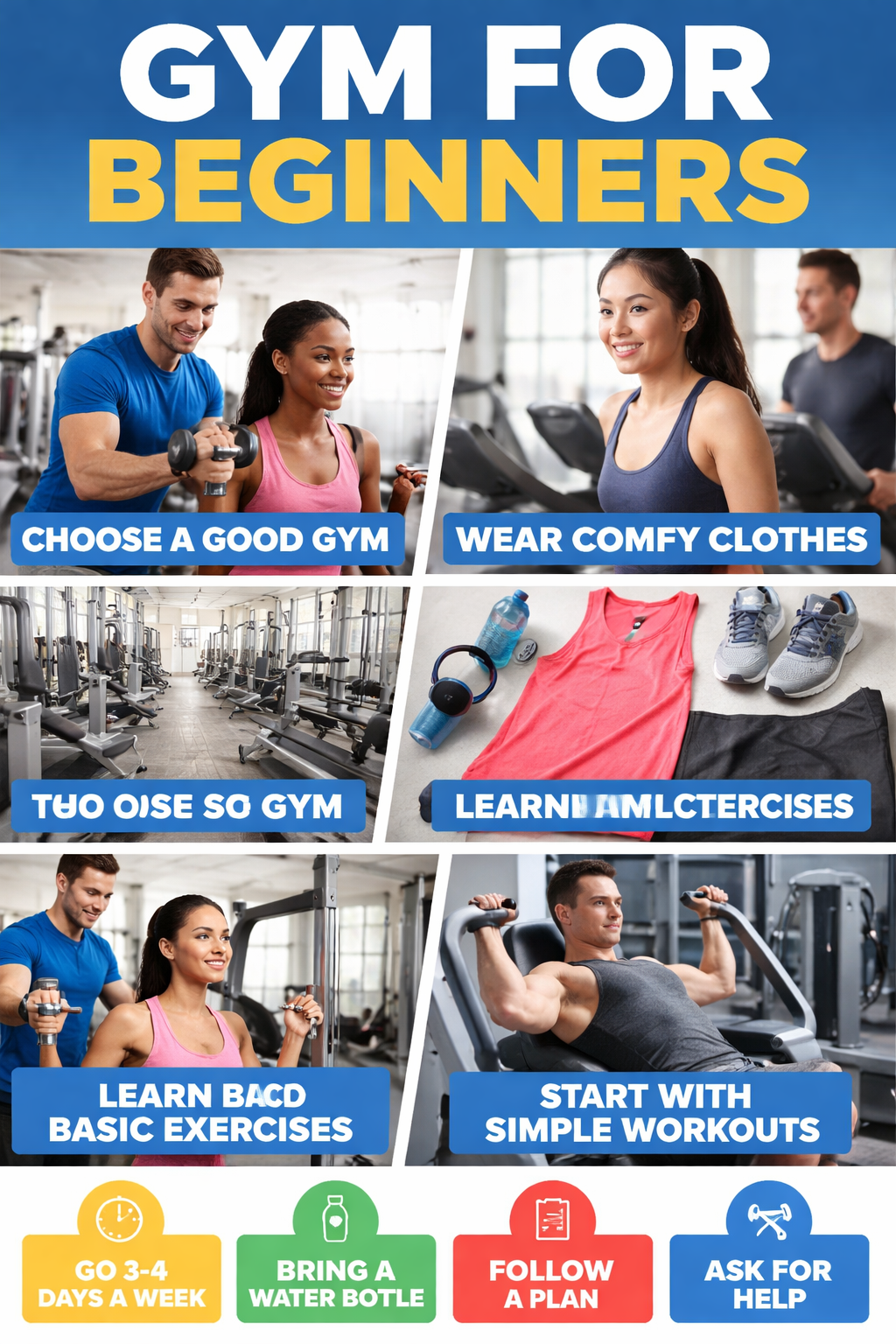
Introduction: Starting the Gym for Beginners (What to Expect)
Starting a gym for beginners journey often feels exciting, confusing, and intimidating all at once. Many beginners imagine walking into a gym filled with muscular people, complicated machines, and unspoken rules they don’t understand. This fear is completely normal. Research on exercise behavior shows that over 60% of gym beginners feel anxiety during their first week, mostly because they don’t know what to do or fear being judged.
The truth is simple: every fit person you see in the gym was once a beginner. No one starts confident, strong, or perfectly disciplined. A gym for beginners is not about lifting heavy weights or following extreme routines. It is about learning the basics, building consistency, and creating healthy habits that last for years, not weeks.
When beginners join a gym with proper guidance, results come faster and injuries are avoided. Studies show that beginners who follow a structured workout plan are 2–3 times more likely to stay consistent for six months compared to those who train without direction. Consistency, not intensity, is what builds real transformation.
A gym for beginners helps improve:
- Physical health (strength, endurance, fat loss)
- Mental health (confidence, stress reduction)
- Lifestyle discipline (routine, energy, focus)
“You don’t have to be great to start, but you have to start to be great.”
This complete guide to the gym for beginners is designed for people with little to no experience. Whether your goal is weight loss, muscle gain, better health, or confidence, this article will walk you through everything step by step. You will learn what a beginner-friendly gym looks like, what to expect on your first day, how to exercise safely, what to eat, and how to stay motivated even when progress feels slow.What Is a Gym for Beginners?
A gym for beginners is not a special or separate type of gym—it is a gym environment and approach that supports people who are new to fitness. For beginners, the gym should feel approachable, safe, and structured, not confusing or overwhelming. The goal is not extreme performance, but learning how to move correctly, build strength gradually, and stay consistent.
For a beginner, the gym is a learning space. It teaches your body how to exercise and your mind how to stay disciplined. Unlike advanced gym training, which focuses on specialization and heavy lifting, a gym for beginners focuses on foundational movement patterns, proper form, and basic fitness education.
How a Beginner-Friendly Gym Is Different
A beginner-friendly gym has features that make it easier for new members to adapt without fear or confusion. These gyms may not advertise themselves as “beginner gyms,” but they naturally support beginners through layout, equipment, and staff behavior.
Key characteristics include:
- Simple and organized equipment layout
Machines are easy to identify and often include diagrams showing how to use them. This reduces confusion and anxiety for first-time gym users. - More machines, fewer complex free-weight setups
Machines help beginners control movement and reduce injury risk compared to advanced free-weight exercises. - Supportive trainers and staff
Beginner-friendly gyms encourage questions and guidance rather than intimidation. - Welcoming environment
No pressure to lift heavy weights or perform advanced workouts.
According to fitness industry data, beginners who train in a supportive gym environment are 40% less likely to quit within the first three months. Comfort matters more than equipment variety when starting out.
Fact: Confidence is built faster in environments where beginners feel safe asking questions.
Is the Gym Necessary for Beginners?
Many people wonder whether joining a gym is necessary when starting fitness. The answer depends on goals, lifestyle, and access to equipment.
Home workouts vs gym for beginners:
| Factor | Home Workouts | Gym for Beginners |
|---|---|---|
| Equipment | Limited | Wide variety |
| Motivation | Lower for many | Higher due to environment |
| Progression | Slower | Easier to increase intensity |
| Guidance | Minimal | Trainers available |
| Distractions | High | Low |
For beginners, the gym provides structure and accountability. Research shows that people who join a gym are 70% more likely to meet weekly activity goals compared to those who rely only on home workouts.
That said, a gym is not mandatory. However, if your goal is long-term fitness, muscle gain, or sustainable weight loss, a gym for beginners offers faster learning and better consistency.
What Beginners Should Expect from the Gym
Beginners often expect quick results, but the gym works best when expectations are realistic.
In the first few weeks, beginners usually notice:
- Improved energy levels
- Better mood and sleep
- Mild muscle soreness
- Small strength improvements
Visible body changes take more time. On average:
- 2–3 weeks: Strength increases
- 4–6 weeks: Visible changes begin
- 12 weeks: Noticeable transformation
The gym for beginners is about progress, not perfection. Learning proper form, building confidence, and showing up consistently matter far more than how much weight you lift.Who Should Join a Gym for Beginners?
A gym for beginners is suitable for almost anyone who wants to improve their health, fitness, or confidence—regardless of age, body type, or current fitness level. You do not need to be strong, lean, or experienced to join a gym. In fact, the gym is where beginners become fit, not where fit people start.
Many beginners delay joining a gym because they believe they are “not ready yet.” This mindset often leads to months or years of inactivity. Fitness experts agree that starting before you feel ready is the key to long-term success.
Complete Beginners with No Workout Experience
If you have never exercised before or have no idea how gym machines work, you are exactly who a gym for beginners is designed for. Beginner-friendly gyms help you:
- Learn correct exercise form
- Understand basic workout structure
- Build confidence through repetition
Studies show that beginners who start with guided gym training have lower injury rates and higher confidence levels than those who try to figure everything out alone.
People Returning After a Long Break
Many people return to the gym after months or years of inactivity due to:
- Work stress
- Injuries
- Family responsibilities
- Loss of motivation
A gym for beginners is perfect for restarting because it focuses on rebuilding foundations, not pushing limits. Muscle memory allows returning beginners to regain strength faster, but only if training is done safely and progressively.
Fact: Research on muscle memory shows that previously trained individuals can regain lost muscle up to 40% faster than first-time beginners.
Overweight Beginners Starting Fitness
For overweight beginners, the gym can feel intimidating. However, a gym for beginners provides controlled environments that support:
- Low-impact cardio machines
- Strength training for fat loss
- Joint-friendly workouts
Strength training is especially important. Studies show that overweight beginners who lift weights burn more fat over time than those who rely only on cardio.
Skinny Beginners Wanting to Build Muscle
Many skinny beginners avoid gyms because they feel too weak or embarrassed. In reality, gyms are one of the best places for muscle-building beginners. A gym for beginners helps:
- Learn progressive overload
- Access proper resistance
- Track strength improvements
With proper training and nutrition, beginners can gain 0.5–1 kg of muscle per month during the first few months.
Busy People Needing Structure
For people with busy schedules, gyms provide:
- Time-efficient workouts
- Reduced distractions
- Structured routines
Even 30–45 minutes, 3 times per week is enough for beginners to see results when training is structuredHow to Choose the Best Gym for Beginners
Choosing the right gym for beginners is one of the most important decisions you will make at the start of your fitness journey. A good gym can motivate you, keep you consistent, and help you progress safely. A bad gym can make you feel uncomfortable, confused, and discouraged. For beginners, the environment matters more than fancy equipment.
Research in behavioral fitness shows that gym satisfaction directly impacts long-term consistency. Beginners who feel comfortable in their gym are far more likely to continue training beyond the first three months.
Important Things to Look for in a Beginner Gym
When evaluating a gym for beginners, focus on practical factors rather than marketing promises.
Key features to look for:
- Clean and hygienic environment
Clean floors, equipment, and restrooms reduce illness risk and improve comfort. - Proper equipment availability
Look for basic machines like leg press, chest press, lat pulldown, treadmill, and stationary bikes. - Beginner-friendly trainers
Trainers should be approachable, patient, and willing to explain exercises clearly. - Safe and organized layout
Equipment should not feel cramped or chaotic. - Supportive atmosphere
A gym where beginners, women, and older members feel welcome is ideal.
Fact: According to gym usage studies, beginners are 35% more likely to stay consistent when staff provide early guidance.
Gym Membership Tips for Beginners
Before committing to a membership, beginners should understand what they are paying for.
Helpful tips:
- Ask for a free trial or demo session
- Choose monthly plans before long-term contracts
- Confirm trainer availability and extra fees
- Ask about cancellation policies
Avoid locking into expensive annual memberships until you are confident you will stay consistent.
Best Time to Go to the Gym for Beginners
Crowd levels can heavily affect beginner confidence. Training during less busy hours helps beginners learn without pressure.
Best times for beginners:
- Early morning: 6:00–8:00 AM
- Midday: 11:00 AM–3:00 PM
- Late evening: After 9:00 PM
Avoid peak hours (usually 5:00–8:00 PM) during the first few weeks. Fewer people mean less waiting, more space, and easier access to trainers.
Location and Convenience Matter
A gym close to home or work improves consistency. Research shows that people are twice as likely to attend a gym that is within a 10-minute commute.
The best gym for beginners is not the biggest or most expensive one. It is the gym you can visit regularly and feel comfortable in.What to Wear to the Gym for Beginners
Choosing the right clothing is an often-overlooked part of starting a gym for beginners journey. What you wear can affect your comfort, confidence, performance, and even safety. Beginners sometimes think they need expensive or trendy gym outfits, but the truth is simple: comfort and function matter more than appearance.
Fitness studies show that wearing comfortable workout clothing improves range of motion and reduces distractions, helping beginners stay focused on learning exercises instead of adjusting uncomfortable clothes.
Gym Clothing for Beginners (Men & Women)
For beginners, gym clothing should allow easy movement, proper airflow, and sweat absorption.
Essential clothing guidelines:
- Breathable fabrics (cotton blends, polyester, or moisture-wicking materials)
- Comfortable fit (not too tight, not too loose)
- Flexible materials that allow bending and stretching
For men:
- T-shirts or athletic tops
- Track pants or gym shorts
- Supportive training shoes
For women:
- T-shirts, tank tops, or athletic tops
- Leggings or track pants
- Supportive sports bra
- Training shoes with good grip
Avoid clothing that restricts movement or causes discomfort. Beginners should focus on learning exercises, not adjusting outfits.
Fact: Comfort increases workout adherence. People who feel physically comfortable are 30% more likely to complete workouts consistently.
Shoes for Gym Beginners
Shoes are the most important gym item for beginners. The wrong shoes can lead to foot pain, poor balance, and even injuries.
Good gym shoes for beginners should:
- Have a flat and stable sole
- Provide proper grip
- Support natural foot movement
Avoid:
- Running shoes with soft cushioning for heavy lifting
- Slippers or sandals
- Old or worn-out shoes
If possible, choose cross-training shoes. They work well for strength training, machines, and light cardio.
Gym Bag Essentials for Beginners
Carrying a basic gym bag helps beginners stay organized and hygienic.
Beginner gym bag checklist:
- Water bottle (hydration is essential)
- Small towel (to wipe sweat)
- Lock (for lockers)
- Personal hygiene items (deodorant, wipes)
Keeping these basics ready reduces excuses and builds a strong gym habit.
What Beginners Should Avoid Wearing
Beginners should avoid:
- Jeans or denim
- Very loose clothing that can catch on machines
- Heavy jewelry or accessories
- Perfumes (can be overwhelming in enclosed spaces)
The goal of gym clothing is not to impress others. It is to help you move safely and comfortably.Gym Etiquette for Beginners (Do’s and Don’ts)
Understanding gym etiquette is a crucial part of feeling confident in a gym for beginners. Many beginners feel nervous not because of the exercises, but because they are afraid of breaking gym rules or being judged. The good news is that gym etiquette is simple, logical, and based on respect.
Learning basic gym manners helps beginners blend in quickly and creates a positive experience for everyone.
Basic Gym Rules Beginners Must Follow
These unwritten rules apply to almost every gym and are especially important for beginners.
Essential gym etiquette rules:
- Wipe equipment after use
Sweat can spread germs. Most gyms provide wipes or sprays. - Return weights and equipment
Put dumbbells, plates, and accessories back where they belong. - Respect personal space
Avoid standing too close to someone while they are exercising. - Limit phone use
Do not sit on machines scrolling through your phone. - Share equipment when possible
If the gym is busy, allow others to work in between your sets.
Fact: Gyms that promote etiquette and cleanliness report higher member satisfaction and retention rates.
Common Beginner Gym Mistakes to Avoid
Beginners often make small mistakes that can slow progress or increase injury risk.
Avoid these beginner mistakes:
- Skipping warm-ups
Cold muscles are more prone to injury. - Using too much weight
Ego lifting leads to poor form and injuries. - Copying advanced lifters
Advanced routines are not designed for beginners. - Ignoring pain signals
Pain is different from muscle fatigue.
Gym Behavior That Builds Confidence
Positive behavior helps beginners feel comfortable faster.
Helpful habits:
- Ask trainers for help when unsure
- Observe how others use machines
- Stay patient and focused on your own progress
Quote: “The gym is not a competition; it’s a classroom.”
Most gym-goers are focused on their own workouts. Beginners are rarely judged, and when they are noticed, it is often with respect for showing up and trying.First Day at the Gym for Beginners (Step-by-Step)
The first day at a gym for beginners is often the hardest. Not because the workout is difficult, but because everything feels new. Knowing exactly what to do removes fear and replaces it with confidence. When beginners have a clear plan, their first gym experience becomes positive and motivating instead of stressful.
Studies in fitness psychology show that people who feel successful on their first gym visit are far more likely to return. That success comes from preparation, not intensity.
What to Do on Your First Day at the Gym
Your first gym session should focus on learning, not pushing limits.
Step-by-step first-day plan:
- Arrive early
Give yourself time to look around without pressure. - Check in and get oriented
Ask staff for a quick tour of the gym. - Meet a trainer if available
Even a short introduction helps reduce confusion. - Start with a warm-up
5–10 minutes on a treadmill or bike prepares your body. - Use basic machines
Choose simple, guided machines like leg press or chest press. - End with light stretching
This helps reduce soreness and improves recovery.
Fact: Beginners who start with light, full-body workouts report less soreness and better consistency.
How Long Should a Beginner Stay at the Gym?
Many beginners believe longer workouts mean better results. This is not true.
Recommended gym duration for beginners:
- 30–45 minutes per session
- 2–4 days per week
Shorter sessions reduce fatigue, prevent burnout, and improve habit formation. Consistency beats long, exhausting workouts.
What Beginners Should NOT Do on Day One
Avoid these mistakes on your first day:
- Training until exhaustion
- Trying every machine
- Lifting heavy weights
- Comparing yourself to others
Your first day is about building confidence and familiarity, not proving strength.
How You Should Feel After Your First Workout
After your first gym session, you should feel:
- Slightly tired
- Mentally positive
- Motivated to return
Mild muscle soreness within 24–48 hours is normal. Sharp pain or extreme fatigue is not.
Rule for beginners: Leave the gym feeling like you could do a little more.Beginner Gym Workout Plan (Full Weekly Schedule)
A structured beginner gym workout plan is essential for building strength, improving endurance, and creating consistency. Beginners often make the mistake of training without a plan, which leads to slow progress, frustration, or even injury. A proper plan balances full-body workouts, cardio, and rest days to maximize results safely.
Research in exercise science shows that beginners who follow a 3–4 day structured plan gain muscle and strength faster than those who train randomly.
How Many Days a Week Should Beginners Go to the Gym?
The frequency of workouts depends on goals and schedule:
- 3 days per week: Ideal for full-body workouts and beginners with limited time
- 4 days per week: Slightly higher volume, can split upper/lower body
- 5 days per week: Advanced beginner schedule, includes cardio focus
Rest days are critical—muscles grow and recover while you rest, not while you train.
Tip: Beginners should always start conservatively to prevent overtraining and maintain motivation.
Beginner Full-Body Gym Workout
For the first 4–6 weeks, beginners should focus on compound movements using machines or light free weights. These exercises target multiple muscle groups and teach proper form.
Sample Full-Body Beginner Workout:
| Exercise | Sets | Reps | Notes |
|---|---|---|---|
| Leg Press | 3 | 12 | Use moderate weight |
| Chest Press | 3 | 12 | Controlled motion |
| Lat Pulldown | 3 | 12 | Focus on back contraction |
| Shoulder Press | 3 | 12 | Start light to avoid shoulder strain |
| Seated Row | 3 | 12 | Keep back straight |
| Plank | 3 | 20–40 sec | Strengthens core |
| Stationary Bike | 10–15 min | N/A | Light cardio to finish |
Tips for beginners:
- Rest 60–90 seconds between sets
- Focus on proper form, not weight
- Gradually increase weight as strength improves
Gym Workout Plan for Beginners (7-Day Example)
For clarity, here’s a full week schedule tailored for beginners:
| Day | Workout Focus |
|---|---|
| Monday | Full-body strength + 10 min cardio |
| Tuesday | Rest or light walking |
| Wednesday | Full-body strength + 10 min cardio |
| Thursday | Rest or yoga/stretching |
| Friday | Full-body strength + 10 min cardio |
| Saturday | Optional light cardio or mobility work |
| Sunday | Rest |
This schedule allows beginners to build habit, recovery, and steady progress without overwhelming the body.
Key Principles for Beginner Progress
- Consistency over intensity – Short, regular workouts work better than sporadic long sessions.
- Progressive overload – Gradually increase weight or repetitions to improve strength.
- Proper recovery – Rest and nutrition are as important as workouts.
- Track progress – Logging workouts helps maintain motivation and focus.
Fact: Beginners who follow a structured plan are 50% more likely to stay consistent for 3 months compared to unplanned workouts.Best Gym Exercises for Beginners
For beginners, the best gym exercises are those that build a strong foundation, improve mobility, and teach proper movement patterns. The focus should be on compound exercises that work multiple muscle groups, supplemented with some isolation exercises for balance. Beginners should prioritize safety, correct form, and gradual progression over lifting heavy weights.
Upper Body Gym Exercises for Beginners
The upper body includes chest, back, shoulders, and arms. For beginners, machines and light free weights are ideal to build strength safely.
Recommended exercises:
- Chest Press (Machine or Dumbbell) – Builds chest, shoulders, and triceps
- Lat Pulldown – Strengthens back and biceps, teaches pulling motion
- Seated Row – Improves posture and strengthens middle back
- Shoulder Press – Strengthens shoulders; use light weights first
- Bicep Curls – Optional for arm focus
- Tricep Pushdowns – Optional isolation exercise for arms
Tip: Beginners should use 2–3 sets of 10–12 reps for each exercise, focusing on controlled movements.
Lower Body Gym Exercises for Beginners
The lower body is often neglected by beginners, but strong legs are essential for overall fitness.
Recommended exercises:
- Leg Press (Machine) – Works quads, hamstrings, glutes
- Bodyweight Squats – Teaches proper squat form before adding weight
- Leg Curl / Hamstring Machine – Strengthens hamstrings
- Calf Raises – Improves calf strength and stability
- Glute Bridges – Strengthens glutes safely
Note: Proper form is crucial to prevent knee and lower back injuries. Beginners should start with light resistance and gradually increase weight.
Core and Abs Exercises for Beginners at the Gym
A strong core improves posture, balance, and performance in all exercises.
Beginner-friendly core exercises:
- Plank – Builds stability; start with 20–30 seconds
- Crunches / Machine Crunches – Focus on slow, controlled motion
- Russian Twists (Bodyweight) – Strengthens obliques
- Leg Raises – Engages lower abs; perform slowly to avoid strain
Fact: Beginners who include core exercises 2–3 times per week report better posture and reduced lower back pain within a month.
Tips for Beginners Using Gym Equipment
- Start with machines before moving to free weights – they guide motion and reduce injury risk.
- Focus on proper breathing – exhale during exertion, inhale on release.
- Don’t rush – controlled movements maximize results and prevent injury.
- Ask a trainer if unsure – most gyms offer a free consultation for beginners.
By mastering these foundational exercises, beginners can safely progress to more advanced workouts, build confidence, and see measurable results in strength, endurance, and overall fitness.Cardio at the Gym for Beginners
Cardiovascular exercise is an essential component of a gym for beginners program. It improves heart health, increases stamina, aids in fat loss, and complements strength training. Beginners often worry that cardio is boring or too difficult, but the key is to start slow, stay consistent, and choose exercises you enjoy.
Studies show that beginners who combine cardio with strength training see faster fat loss and improved overall fitness than those who only focus on one type of training.
Best Cardio Machines for Beginners
Gyms typically offer several beginner-friendly cardio machines. These machines allow controlled movement, adjustable intensity, and low injury risk.
Recommended cardio machines:
- Treadmill – Walking or light jogging; great for endurance and calorie burn
- Stationary Bike – Low-impact option for beginners with joint concerns
- Elliptical Trainer – Full-body cardio without heavy impact on knees or hips
- Rowing Machine – Works both upper and lower body while improving cardiovascular health
Tip: Start with 10–15 minutes per session and gradually increase duration as your stamina improves.
How Much Cardio Should Beginners Do?
The ideal cardio volume depends on your goals:
- General fitness: 20–30 minutes, 3–4 times per week
- Weight loss: 30–45 minutes, 3–5 times per week
- Endurance building: 30–60 minutes, 4–5 times per week
Intensity for beginners:
- Use the “talk test” – you should be able to hold a conversation without gasping
- Start at low to moderate intensity to avoid burnout or injury
Cardio + Strength Balance:
Beginners should aim to combine strength training 2–3 times per week with cardio on alternate days or after workouts. This combination maximizes fat loss while preserving and building muscle.
Tips for Beginner Cardio Success
- Warm up for 5 minutes before cardio to reduce injury risk
- Stay hydrated – even light cardio can dehydrate you
- Mix machines to prevent boredom
- Track progress – duration, distance, or calories burned to stay motivated
- Listen to your body – avoid overexertion, especially in the first few weeks
Fact: Beginners who perform 150 minutes of moderate-intensity cardio per week improve cardiovascular health and reduce body fat by 5–7% in the first month.Gym Diet Plan for Beginners
Nutrition plays a critical role in any gym for beginners program. Without proper diet, even the best workouts will deliver limited results. Beginners often make the mistake of focusing only on exercise while ignoring nutrition. Eating correctly fuels workouts, aids recovery, and supports your goals—whether fat loss, muscle gain, or overall health.
Research shows that 90% of beginner fitness results are influenced by diet, making it just as important as exercise.
What Should Beginners Eat Before the Gym?
Pre-workout nutrition provides energy for your session. Beginners should focus on easily digestible carbohydrates, moderate protein, and minimal fat.
Pre-workout food ideas (30–60 minutes before training):
- Banana with a small spoon of peanut butter
- Greek yogurt with berries
- Oatmeal with a handful of nuts
- Whole-grain toast with a slice of turkey or egg
Tips:
- Avoid heavy meals that can cause sluggishness
- Stay hydrated with water before exercise
Fact: Eating a small carbohydrate-protein snack before workouts improves energy levels and strength output in beginners.
What to Eat After the Gym for Beginners
Post-workout nutrition is essential for muscle recovery and growth. Beginners often skip this meal, which can delay progress and increase soreness.
Post-workout food guidelines:
- Include protein to repair muscles
- Add carbohydrates to replenish glycogen
- Include healthy fats in moderation
Post-workout meal ideas:
- Grilled chicken with quinoa and vegetables
- Protein shake with banana and oats
- Salmon with sweet potatoes and broccoli
- Cottage cheese with berries
Tips:
- Eat within 60 minutes after training for optimal recovery
- Drink water or an electrolyte drink if sweating heavily
Beginner Gym Nutrition Mistakes
Many beginners unintentionally sabotage results by making common mistakes:
- Skipping meals – leads to low energy and poor performance
- Overusing supplements – protein shakes cannot replace whole food meals
- Neglecting hydration – dehydration reduces strength and endurance
- Overeating “healthy” foods – portion control is essential
Tip: Track meals initially to understand portions, nutrient balance, and calorie intake. Beginners often underestimate the impact of small daily habits on results.
Simple Nutrition Rule for Beginners
- 80% whole, minimally processed foods (fruits, vegetables, lean proteins, whole grains)
- 20% flexibility for treats or occasional indulgences
- Focus on progress, not perfection
A proper diet fuels your workouts, accelerates results, and teaches long-term healthy eating habits that will support your gym routine for years.Supplements for Gym Beginners (Do You Need Them?)
Supplements are a popular topic among beginners starting a gym for beginners program. Many newcomers feel overwhelmed by the variety of powders, pills, and shakes available. The truth is simple: most beginners do not need supplements to see significant results. Proper nutrition, consistency, and structured workouts are far more important.
Research shows that beginners relying primarily on supplements without a solid diet often see minimal improvements. Supplements should be considered as support, not a replacement for real food.
Safe Supplements for Beginners
If you choose to use supplements, these are safe, effective, and beginner-friendly:
- Protein Powder
- Helps meet daily protein needs for muscle repair
- Convenient post-workout option if meals are insufficient
- Whey or plant-based proteins are ideal
- Multivitamins
- Ensures adequate intake of essential vitamins and minerals
- Supports energy, immunity, and recovery
- Creatine (Optional)
- Supports strength and performance in beginners
- Safe in recommended doses (3–5g per day)
- Only necessary once consistent training is established
Supplements Beginners Should Avoid
Certain supplements are not recommended for beginners due to potential health risks or lack of evidence:
- Fat burners – Often contain stimulants that can increase heart rate and anxiety
- Pre-workout with high caffeine – May cause jitters or insomnia
- Exotic “quick-fix” powders – Limited research, often expensive and ineffective
Fact: Beginners achieve 90–95% of their initial results through proper nutrition and consistent training, without any supplements.
Tips for Using Supplements Safely
- Consult a healthcare professional before starting any supplement
- Focus on whole foods first—protein from meat, eggs, beans, dairy
- Use supplements as a convenience tool, not a crutch
- Track how your body responds; discontinue if adverse effects occur
Key takeaway: Supplements can help, but they are not necessary for beginner success. A well-structured diet and workout plan provide all the nutrients and energy you need to see results.